Image via Complex UK
Germany have won the World Cup and as a result, we can expect even more eyes to turn to European football’s underappreciated stepchild: the Bundesliga.
While the Premier League and La Liga continue to dominate most of the football headlines and pay some of the world’s biggest transfer fees, players from the Bundesliga notched more goals than any other league at this summer’s World Cup and three of the last six Champions League finals have featured German teams (a larger proportion than any other nation).
German club football is the on the rise and we all need to realise it. Here’s our survival guide for watching Bundesliga in 2014/15.
Here's how Bundesliga works
The Bundesliga isn’t much different to any other of Europe’s major leagues in that all teams play each other twice - home and away - from August until late May. Unlike the Premier League, the Bundesliga does impose a winter break of six weeks, which gives players a rare chance to relax from mid-December through to the end of January.
Bundesliga is currently ranked as the 3rd best league in Europe according to UEFA’s coefficient and as a result, the top three clubs in the table at the end of the season automatically qualify for the Champions League. The 4th place team enters at a qualifying round, while those in 5th and 6th place have a chance to star on Channel 5 each Thursday night in the Europa League.
It’s at the other end of the table where things get a little different. The bottom two teams get automatically relegated to the 2. Bundesliga (the second tier), with the top two teams from that division earning promotion to the top flight. The third-from-bottom club in the Bundesliga will compete in a play-off over two legs with the third place side from the second tier. The winner earns the right to play in Germany’s premier competition the following season.
Bayern Munich are the most successful team in German league history, with 23 titles, while Hamburg is the only team to have played continuously in the Bundesliga since foundation.
These are the biggest transfer stories in Germany this summer
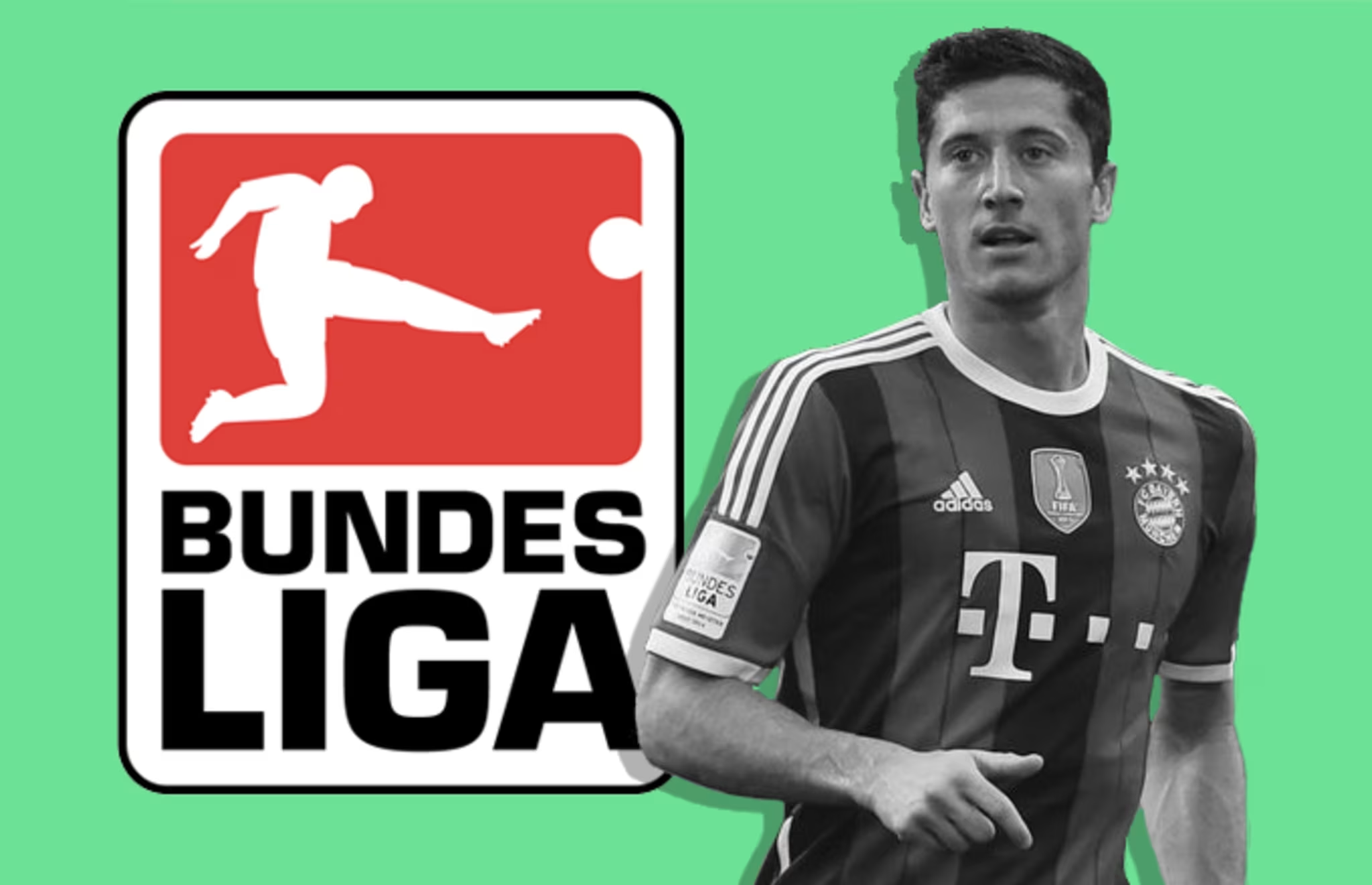
German club officials have been too busy celebrating their country’s World Cup success to become embroiled in highly-charged transfer sagas. In fact, the most notable Bundesliga deal of this window was tied up months ago. After scoring 74 goals in four seasons at Borussia Dortmund (and winning two titles in the process), Robert Lewandowski became the latest to leave Signal Iduna Park and join Pep Guardiola at Bayern Munich. The Polish striker moved on a free transfer and his move adds yet another layer to the first clash between Bayern and Borussia, which takes place on November 1st.
Dortmund proceeded to fill the void left by Lewandowski with the high profile signing of Italy’s World Cup striker Ciro Immobile, who moved to Dortmund from Torino. In addition to last season’s Serie A top scorer, Jurgen Klopp has made moves for Adrian Ramos and ex-Sunderland forward Ji Dong-Won, from Hertha Berlin and Augsburg respectively.
Bayer Leverkusen bid auf wiedersehen to manager Sami Hyypia towards the end of last season and they’ve spent money on some of the Bundesliga’s brightest young sparks to kickstart their bid for a tilt at the title. 20-year-old creative midfielder and Turkish international Hakan Çalhanoğlu left fallen giants Hamburg for €14.5 million and Josip Drmić, a one-time target of Arsene Wenger, has been brought in to replace the outgoing Sidney Sam.
Chelsea fans will have one eye on the Bundesliga this year with three of the club’s most highly rated prospects moving to Germany on loan. Eintracht Frankfurt pick up Lucas Piazon, Borussia Mönchengladbach get Thorgan Hazard and newly-promoted FC Köln grab centre back Tomas Kalas, who impressed during Chelsea’s memorable 0-2 win at Anfield last season.
Here’s a look at this year’s newly promoted teams
Bundesliga welcomes just two new teams this campaign after Hamburg triumphed in last season’s relegation play-off to keep their top flight spot. FC Köln triumphed in the 2. Bundesliga last year and managed to boast the best defence in German football, conceding only 20 goals. It’s at the other end of the pitch where the side struggled, scoring just 53 times with 12-goal Patrick Helmes the club’s top scorer. Simon Zoller has joined the side from Kaiserslautern but with just 13 goals in the second tier last season, it doesn’t appear to be a huge upgrade.
Joining them is SC Paderborn 07, the underdogs of German football who will play in the top flight for the first time in their history this coming season. Turkish striker Mahir Saglik top scored in 2. Bundesliga last year, while crafty midfielder Alban Meha was the division’s Player of the Season. Swashbuckling Paderborn conceded the second highest number of goals in the top half of 2. Bundesliga last year (48 goals) and will have to toughen up to stand a chance against some of Europe’s best strike partnerships. But don’t pencil in any Paderborn games after work on a Friday night...the club aren’t allowed to use their stadium after dark as a result of complaints about noise from locals.
It's easier than ever to watch Bundesliga on TV
Satellite providers are in an almighty battle for subscribers and when it comes to Bundesliga coverage it’s advantage, BT Sport. They’ll be broadcasting close to 100 live games from Germany this year (as well as action from every round of the domestic cup, the DFB-Pokal) and highlights shows will be available throughout the week.
The first game to catch is the season’s opener on August 22nd, when champions Bayern Munich host Wolfsburg.
These are Bundesliga's biggest rivalries
Germany’s Der Klassiker is the only place to start when talking about Bundesliga rivalries. The country’s two most celebrated club sides, Bayern Munich and Borussia Dortmund, have always been competitive but their rivalry grew in the mid-90s after Dortmund capped a period of dominance with a Champions League final victory on Munich’s home turf. Right now, this is the biggest fixture in German football and the exodus of Dortmund’s best players to Munich (Mario Gotze and Robert Lewandowski both joined Bayern in the past two seasons) has given this year’s game an even greater amount of spice. The head-to-head record between Klopp and Guardiola ended at 2-2 last season. Who’ll have the edge this time?
Dortmund are also involved in Bundesliga’s biggest local derby. Borussia and Schalke contest the Ruhr derby, which is fuelled by a rival between the two cities that dates back to the end of World War II. While Schalke edge the head-to-head record, Dortmund dominates a trophy count between the two teams. Nicknamed ‘the mother of derbies’, one of the fixture’s most famous moments came when future-Arsenal keeper/hothead Jens Lehmann scored a last minute equaliser for Schalke in 1997. They clash on September 27th.
The Nordderby, between Hamburg and Werder Bremen, was the backdrop to Germany’s first football related death in 1982 and the rivalry has attracted a heavy police presence ever since. This rivalry reached new heights when the teams met four times in 18 days, during the tail-end of the 2008/09 season, in the Bundesliga, the DFB-Pokal and the UEFA Cup. They meet for the first time this season on November 22nd.
Here are the players set for a breakthrough year
Borussia Dortmund have been the biggest spenders this year and their one-to-watch is a summer arrival. Matthias Ginter didn’t get a game at the World Cup but secured a €10m switch from SC Freiburg and he’ll be expected to compete with Mats Hummels and NevenSubotic for a permanent slot at centre back.
FC Schalke will be as keen as ever to harbour the young talent at their disposal. Eyes will be on the newly-found number 7 Max Meyer, who has until the end of September to become the youngest player with ten Bundesliga goals to his name having netted 6 times in his debut campaign. Fans are also expectant that young Kaan Ayhan and midfielder Leon Goretzka, likened to Michael Ballack, will make an impact.
Elsewhere, VfB Stuttgart’s 18-year-old Timo Werner – who became the youngest player to score two goals in a Bundesliga game at 17-years-old – has been garnering interest from Champions League sides. Finally, mid-table Hoffenheim’s Roberto Firmino will also be in demand if he recaptures last season’s spectacular form when he directly contributed to 28 goals.
Here’s what the bookies say
As far as the bookmakers are confirmed, this is going to be a pretty one-sided Bundesliga season. The longest odds you could find on Bayern to win the league is 1/6, while Dortmund are a distant second favourite at 13/2. Schalke – last season’s third place side – are rank outsiders at 39/1. If you fancy Bayern Munich to repeat their 2013 heroics and win the treble, you’ll be lucky to find odds any more generous than 9/1.
In the race to avoid relegation, newcomers SC Paderborn and FC Köln are favourites to go right back down again, after failing to significantly improve their squads this summer. An outside bet for relegation is Werder Bremen at 5/1, having lost the influential Aaron Hunt to Wolfsburg, who picked up 9 assists and scored 7 goals from midfield last season.
The bookies believe Robert Lewandowski is likely to repeat his Dortmund heroics for Munich and end the season as top goalscorer once again. They’re also offering odds of 3/1 that Dortmund’s one remaining poster boy, Marco Reus, will make the switch to Bayern.