Key Takeaways
- Ryan Murphy says the renewed popularity of Glee among younger streaming and social media audiences has him seriously considering a return to McKinley High, though he hasn’t decided if it would be a reboot, continuation, or new-cast spinoff.
- He credits the show’s legacy—its bold takes on sexuality, race, bullying, gender identity, and more, plus its breakout ensemble led by Lea Michele, Cory Monteith, Chris Colfer, Amber Riley, and Jane Lynch—as a major reason he wants to revisit it.
- Murphy also nods to Glee’s massive cultural and commercial impact, from its hit "Don’t Stop Believin’" cover and Billboard records to tours and a reality competition, arguing that its influence on TV musicals makes a comeback feel overdue.
Ryan Murphy is ready to consider another trip to McKinley High. Eleven years after Glee ended its run on Fox, the show’s co-creator says its resurgence among younger viewers has put a reboot—or something close to it—back in play. No project has been announced, but Murphy is openly entertaining the idea.
Murphy raised the possibility while promoting his new FX series, The Shards. “That show is interesting because it’s come back around,” he told People, pointing to the wave of new fans discovering it through streaming and social media. His takeaway was direct: “Maybe we should revisit that show.”
Murphy did not say whether that return would be a traditional reboot, a continuation, or a spinoff built around a new cast.
Created by Murphy, Brad Falchuk, and Ian Brennan, Glee premiered in 2009 and quickly became much bigger than a show about a high school choir. The series followed New Directions, a collection of ambitious outcasts trying to survive McKinley High’s social hierarchy while competing onstage.
Across six seasons, it took on sexuality, race, bullying, teen pregnancy, disability, gender identity, and body image—often between elaborately staged covers of the biggest songs in pop.
Murphy said nostalgia is only part of the pull. “I love that show, and I loved what it became and what it meant to so many people,” he said.
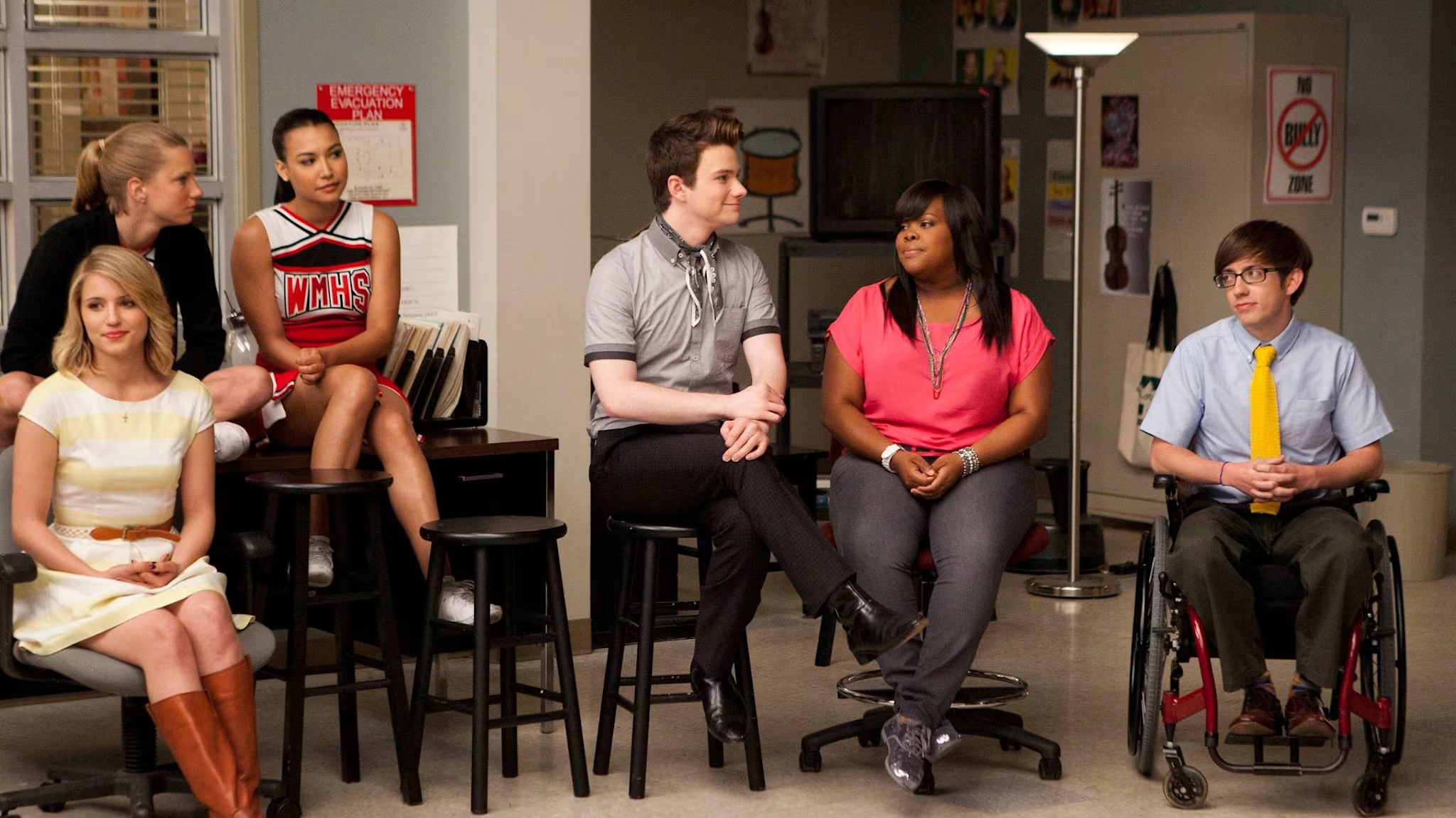
The original ensemble included Matthew Morrison, Lea Michele, Cory Monteith, Chris Colfer, Amber Riley, Kevin McHale, Jenna Ushkowitz, Dianna Agron, Naya Rivera, and Heather Morris.
Jane Lynch, meanwhile, turned cheerleading coach Sue Sylvester into one of television’s most vicious—and most quotable—antagonists.
The show also built a commercial machine that stretched well beyond television. Its version of Journey’s “Don’t Stop Believin’” reached No. 4 on the Billboard Hot 100, and the cast eventually surpassed Elvis Presley’s record for the most appearances on the chart by a single act.
Glee spawned a live tour, a theatrical concert movie, and the reality competition The Glee Project. The original concept was considerably darker: Brennan first wrote Glee as a satirical film based partly on his own high school show-choir experience before it was reworked for network television.




