Key Takeaways
- On Keke Palmer’s podcast, Oprah Winfrey revealed her birth name is actually Orpah—a biblical reference from the Book of Ruth—that morphed into “Oprah” because people kept mispronouncing and misspelling it, a fact she says she didn’t fully clock until around age 20.
- Winfrey told Palmer that podcasting has reignited her love of intimate, long-form conversations after interviewing more than 3,500 guests and said she’s still driven by genuine curiosity and kindness.
- She also broke down how a lawyer’s question—“What if you owned yourself?”—pushed her to negotiate ownership of The Oprah Winfrey Show, a bet on herself that reshaped her into a powerhouse entrepreneur.
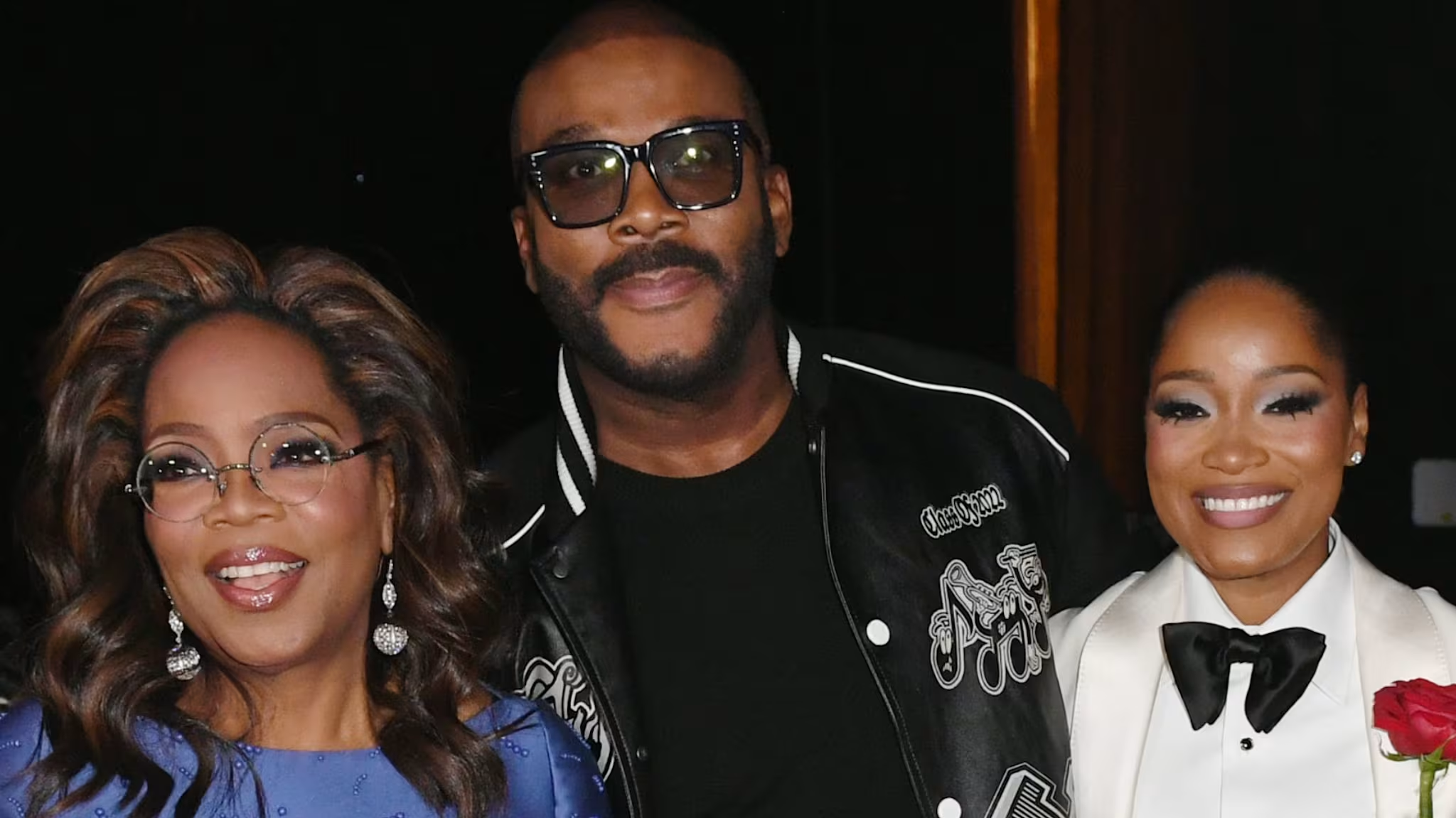
Keke Palmer has interviewed plenty of household names, but even she had a genuine "wait, what?" moment when Oprah Winfrey revealed that one of the world's most recognizable names isn't actually the one she was born with. During the latest episode of Baby, This Is Keke Palmer, the actress and host learned that Winfrey's birth certificate doesn't say "Oprah" at all—it says "Orpah," a biblical name that eventually evolved into the one the public has known for decades.
"Now wait a minute," Palmer said after bringing up the discovery. "I found out that your name was originally Orpah." Winfrey confirmed the story, explaining that her name came directly from the Book of Ruth. "It was Orpah, from the Bible. Ruth, first chapter, 14th verse," she said, noting that she was named after the Ruth and Naomi story.
But the change wasn't intentional. According to Winfrey, people simply struggled to pronounce and spell it correctly while she was growing up. "On my birth certificate, it's Orpah, and then people started calling me Oprah," she explained. "Once they started with Oprah, that's it."
The revelation surprised Palmer even more when Winfrey admitted she didn't realize the mix-up until adulthood. "I didn't learn until I was probably 20 or something that this isn't really my name," Winfrey said, confirming that her official birth certificate still reads "Orpah." Palmer immediately related, joking about her own government name, Lauren Keyana Palmer, prompting Winfrey to reveal she already knew it because she'd watched Palmer's TED Talk.
The conversation quickly expanded beyond names into the experiences that shaped Winfrey's career. Asked what still excites her after interviewing thousands of people, Winfrey said podcasting has rekindled her love for intimate conversations. "I love the intimacy of being one-on-one," she told Palmer, explaining that long-form interviews allow people to reveal far more than the tightly timed segments that defined daytime television.
She also reflected on speaking with more than 3,500 guests throughout her career, saying genuine curiosity and kindness continue to surprise her.
Elsewhere in the interview, Winfrey shared one of the defining business decisions of her career: betting on herself through ownership. She recalled a lawyer asking, "What if you owned yourself?" after she nearly sacrificed everything just to appear in The Color Purple.
That advice ultimately led her to negotiate ownership of The Oprah Winfrey Show, a move that transformed her from television host into one of entertainment's most influential entrepreneurs. "I believed in myself," Winfrey said. "Ownership was the way for me."
The interview also revisited another viral moment that surfaced ahead of the full episode, when Palmer playfully sang Winfrey's short-lived late-1990s theme song "Run On." Winfrey didn't hesitate to laugh at herself, calling the musical experiment "one of the mistakes of my career" before insisting, "It was pretty bad."
Palmer disagreed, telling the media icon the song "wasn't bad," but Winfrey wasn't buying the compliment.






