Key Takeaways
- Catie Norboe says her pattern of drunkenly kissing friends on 90 Day Fiancé stems from intrusive thoughts tied to obsessive-compulsive disorder, plus alcohol and insecurity, and argues that viewers are judging her based on heavily edited footage.
- OCD specialist Alegra Kastens pushes back on that framing, stressing that intrusive thoughts are unwanted and distressing and that people with OCD perform compulsions to prevent feared outcomes rather than treating those thoughts as instructions to act.
- As Norboe and fiancé Josh Atkins clash over her behavior, the show also highlights concerns about her relationship with alcohol, her anxiety over their rushed engagement, and potential dealbreakers around religion and raising future children.
Catie Norboe has blamed her habit of drunkenly kissing friends on intrusive thoughts tied to obsessive-compulsive disorder. Now, an OCD specialist is challenging the 90 Day Fiancé star’s explanation—and drawing a firm line between experiencing an unwanted thought and acting on it.
Alegra Kastens said her response was intended to correct misinformation about OCD, not question whether Norboe has the disorder. “This is NOT an opportunity to attack a person,” Kastens said to The Tab. “I am in no way commenting on whether or not this person has OCD.”
She was less restrained about the way Norboe has connected the diagnosis to her behavior. According to Kastens, people with OCD typically perform compulsions in an effort to keep feared outcomes from happening; they do not treat intrusive thoughts as instructions.
“People with OCD do not act on their intrusive thoughts,” Kastens explained. “They perform excessive and time-consuming compulsions to prevent the thoughts from coming true.”
She added that intrusive thoughts are unwanted and distressing—a critical distinction as Norboe’s conduct becomes one of Season 12’s central conflicts.
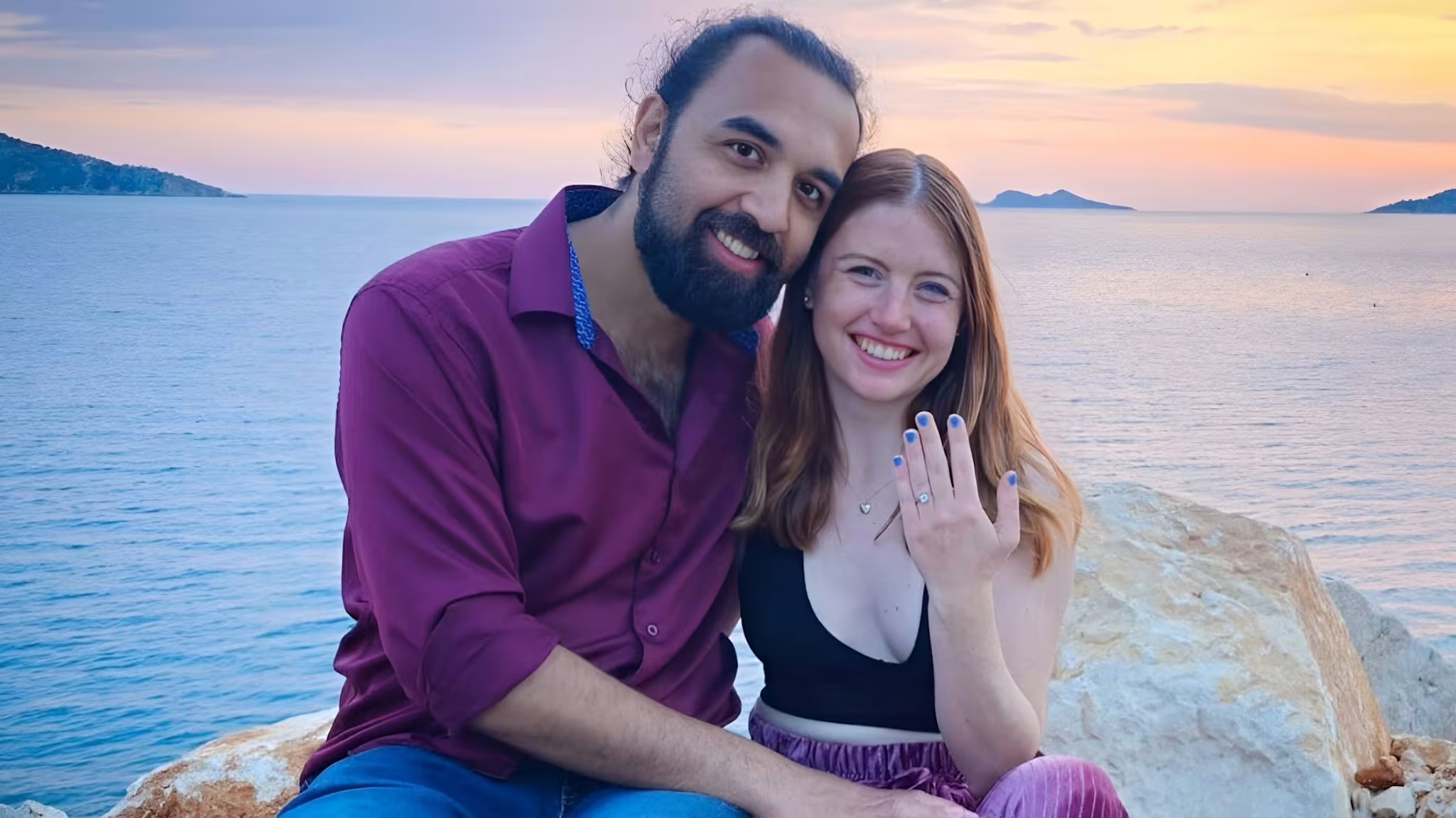
Norboe, a 26-year-old international pet sitter, is engaged to 30-year-old British web developer Josh Atkins. Their whirlwind relationship has been strained by her repeated attempts to kiss friends after drinking, behavior she has attributed to OCD, alcohol, and insecurity.
Atkins has struggled to accept that explanation, particularly as the same problem continues to surface while the couple prepares for marriage.
Norboe argues that viewers and mental-health professionals are reaching conclusions from footage shaped by reality-TV editing. She accused critics of “discounting [her] OCD” based on a “highly edited” series and acknowledged that watching her intoxicated behavior has been uncomfortable.
“Yes, there are actions that I’m not proud of,” she said. “I don’t like watching myself back drunk, that was bad, but I do have OCD.”
She also described years spent dealing with compulsions and repetitive “mind loops,” saying the program reduced that experience to her drunken kissing.
The alcohol component has also drawn concern from someone who knows Norboe off camera. During a recent episode, her friend Ryan told her, “I’m kind of worried about your relationship with alcohol,” noting that “drunk Catie does things that sober Catie regrets a lot.”
Norboe admitted she shared that concern, although she also questioned whether her rushed engagement and uncertainty about marriage were contributing to the turmoil.
The couple already has other major compatibility issues to resolve. Norboe and her family are Lutheran, while Atkins is agnostic, and she has said that refusing to attend church or raise their future children Lutheran could be a dealbreaker. Her mother, Deborah, nevertheless called Atkins “really good for” her and said he encourages Norboe to think more about others.




