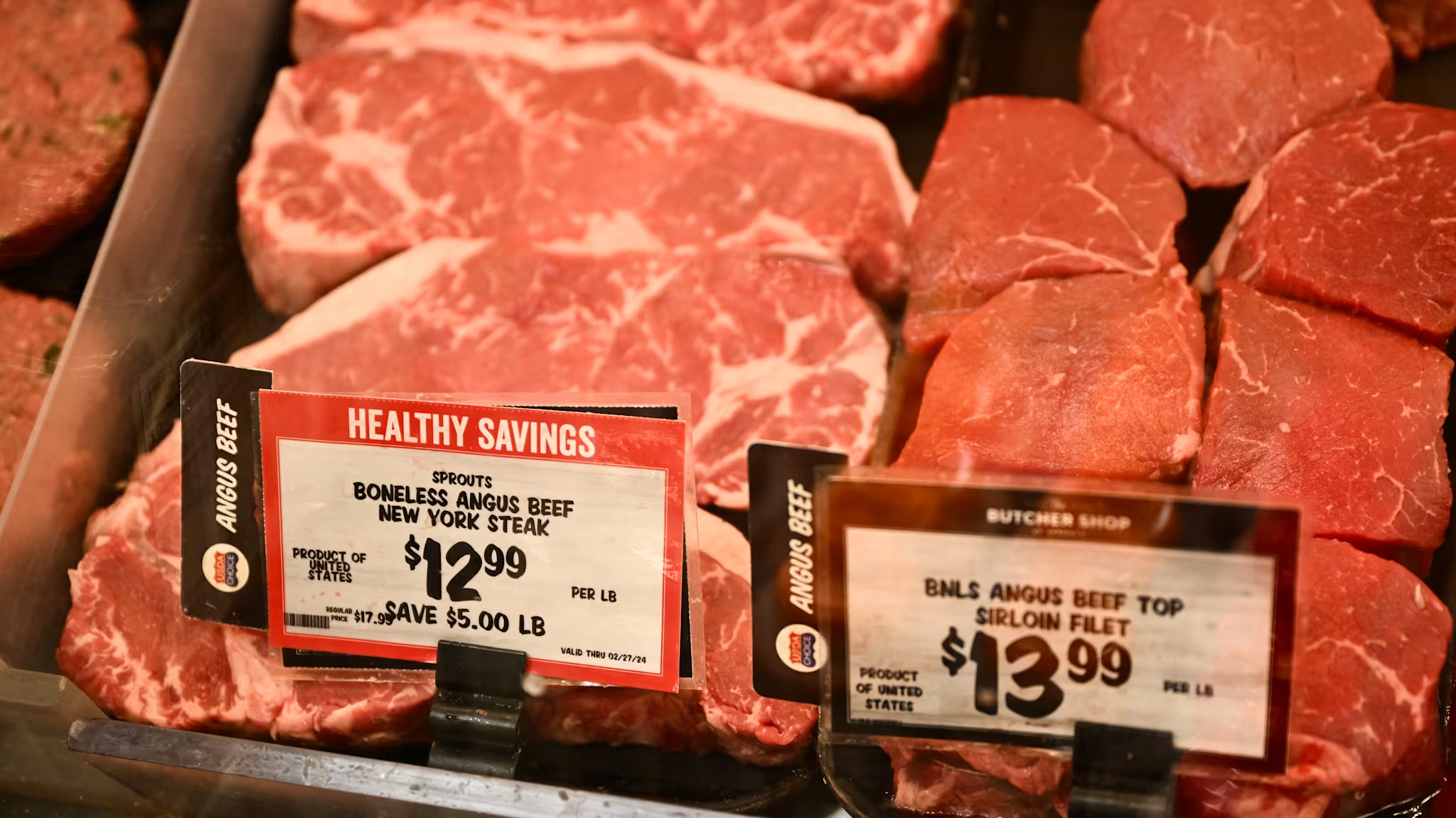
When it comes to buying beef, most people don’t overthink it. You see a cut you like, check the price, and decide whether tonight’s dinner is happening or not. But if you were buying steaks or roasts in the mid-to-late 2010s, one thing was hard to ignore: beef felt expensive, and it didn’t seem to let up.
As it turns out, shoppers weren’t imagining things.
On Monday, December 29, a court-approved notice went out alerting shoppers to settlements tied to a major antitrust lawsuit over beef prices during that exact era.
The case claims that several of the biggest beef processors in the U.S. — including JBS, Cargill, National Beef, and Tyson Foods — entered into what’s called a “market allocation agreement,” essentially agreeing not to compete with each other the way independent companies normally would. According to the lawsuit, the alleged goal and effect of that coordination was simple: protect profit margins and drive up the prices consumers paid at grocery stores.
Although the case names four major processors, only two have agreed to resolve the consumer claims so far. Tyson Foods and Cargill have reached settlements totaling $87.5 million to bring the claims against them to a close. They’ve also agreed to certain non-monetary terms, including cooperating with ongoing litigation.
It’s important to note that these settlements are not an admission of guilt. The court has not ruled that any of the defendants did anything wrong, and both Tyson and Cargill deny all allegations. Like many large antitrust cases, the agreements are a way to avoid years of continued litigation rather than a final judgment on the claims themselves.
Still, the case has drawn attention because of how concentrated the beef industry already is. According to the U.S. Department of Agriculture’s Economic Research Service, the four largest beef packing firms control about 85 percent of steer and heifer purchases in the U.S. That level of concentration has been building for decades, and experts have long warned that when so much of a market is controlled by so few players, the risk of reduced competition — and higher consumer prices — goes up.
All of that context leads to the practical question most shoppers are probably asking now: does this apply to me?
The answer depends on when, where, and what kind of beef you bought. According to the court-approved notice, you may be eligible if:
- You bought qualifying beef for personal use between August 1, 2014, and December 31, 2019
- The beef was purchased at a grocery store or supermarket (not directly from a processor)
- The cuts were fresh or frozen chuck, loin, rib, or round — think common steaks and roasts
- The beef was not premium or specialty (no organic, grass-fed, Wagyu, USDA Prime, kosher, or halal)
- It was not ground, marinated, seasoned, or fully cooked
- You lived in one of the states covered by the settlement, including California, New York, Florida, Illinois, Michigan, Minnesota, and others listed in the notice
If you meet those criteria, you can file a claim to receive a share of the settlement fund. Payments won’t be set amounts and will depend on how many people file valid claims and how much qualifying beef each person reports buying. To get paid, eligible consumers must submit a claim by June 30, 2026.




