Key Takeaways
- Licensed therapist Dr. Naomi Black is suing Nordstrom after staff at its Perimeter Mall store allegedly blocked her from leaving, shoved her into a back office, and searched her bags without consent before admitting they had mistaken her for someone else.
- Black, a trauma specialist, says the incident left her with humiliation, emotional distress, and acute PTSD, and her lawsuit claims Nordstrom violated Georgia’s standards for detaining suspected shoplifters and failed to properly train loss-prevention staff in line with its own code of conduct.
- The case comes amid Nordstrom’s history of racial-bias complaints, including a 2002 suit alleging loss-prevention targeted customers with “African-American characteristics,” a 2018 incident where Black teens were falsely accused of shoplifting, and a 2009 EEOC racial harassment settlement.
Nordstrom is facing a new lawsuit after a Black therapist claimed store employees wrongly detained her, searched her belongings and forcefully shoved her before admitting they had mistaken her for someone else.
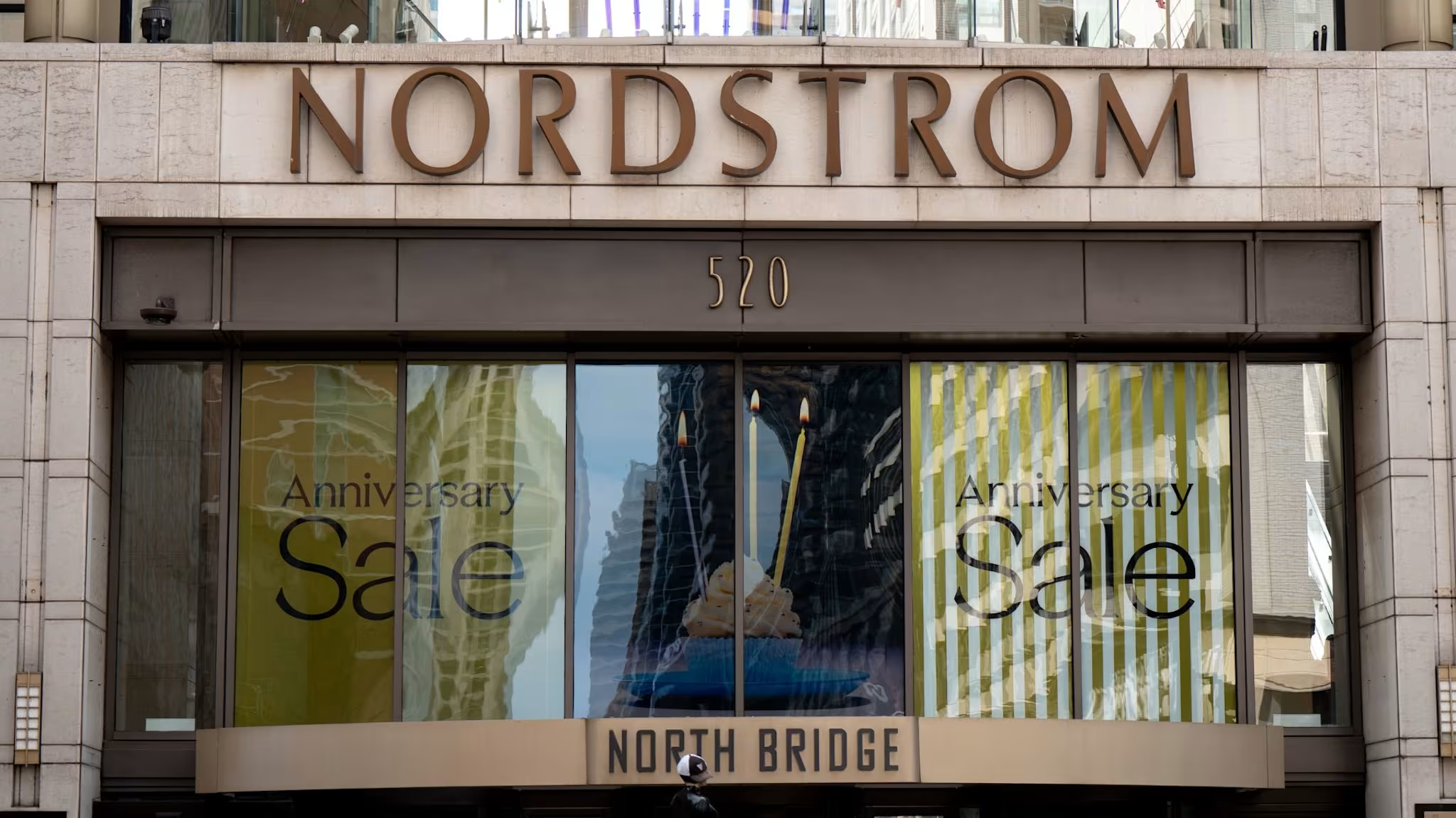
The lawsuit, filed in Georgia state court, accuses the retailer and several employees of false imprisonment, negligence, and unlawful detention following the July 2025 incident at the company's Perimeter Mall location in Dunwoody.
According to the complaint, which was obtained by Atlanta Black Star, licensed professional counselor Dr. Naomi Black was shopping for an upcoming trip to Bali after returning an item and making another purchase when the encounter unfolded. As she headed toward the exit, an employee allegedly blocked her path and told her, "You cannot leave the store."
Moments later, another worker reportedly grabbed her shopping bag and said, "You're going to need to come with us." Black alleges she was escorted to a back office, shoved during the encounter, and subjected to a search of her belongings without consent.
Employees reportedly found nothing because there was nothing to find, later telling her they had "mistaken her for someone else."
Black is a trauma specialist whose career centers on helping people recover from psychological harm. Instead, she says she left the store carrying trauma of her own. The lawsuit alleges she now suffers from emotional distress, humiliation, and acute PTSD after what she describes as an unjustified detention.
The complaint also notes that she never triggered a security alarm or engaged in conduct suggesting shoplifting, arguing that Nordstrom lacked reasonable grounds to detain her.
Black has spoken publicly about the emotional toll of the experience. "I felt violated, and I also felt fear," she said. "What they did to me was unacceptable." She said she repeatedly asked why she was being stopped but received no explanation.
When employees allegedly grabbed and pushed her through the store, Black recalled telling them, "Do not touch me." The encounter ended only after staff acknowledged they had the wrong person, allegedly explaining, "Oh, we just thought that you looked like someone else." According to Black, no apology followed.
Beyond the incident itself, the lawsuit argues Nordstrom failed to properly train its loss-prevention staff and ignored its own code of conduct, which promises customers a respectful and welcoming shopping environment.
Black is seeking damages for emotional and psychological injuries, medical expenses, loss of dignity, and punitive damages designed to discourage similar conduct.
Nordstrom had not publicly commented on the lawsuit as of this writing, and the defendants are expected to respond through the court process.
Nordstrom has faced similar scrutiny before, including a 2002 lawsuit in which former loss-prevention employees alleged investigators were directed to focus on customers with "African-American characteristics."
In 2009, the company paid $292,500 to settle an EEOC racial harassment lawsuit involving Black and Hispanic employees.
And in 2018, the retailer publicly apologized after three Black teenagers shopping for prom outfits at a Missouri Nordstrom Rack were falsely accused of shoplifting despite paying for their purchases.




