Key Takeaways
- Phoebe Gates and Phia co-founder Sophia Kianni are under scrutiny over how their shopping assistant Phia allegedly used a browser extension to secretly drop affiliate cookies and claim commissions on purchases it didn’t drive, a move experts say can qualify as federal wire fraud carrying up to 20 years in prison if charged and convicted.
- Internal messages reportedly show Gates asking to “confirm auto pop for cookie drop is live on ALL sites w a coupon” and Kianni saying “whatever we can do to keep these cookies dropping will be amazing,” undercutting Phia’s claim that the behavior was just a technical anomaly discovered after Bloomberg started asking questions.
- The alleged cookie stuffing made up an estimated 51% of Phia’s June sales and its daily revenue reportedly crashed from about $80,000 to as low as $10,000 after the feature was shut off, prompting affiliate platform Impact.com to suspend Phia and pushing the startup—backed by more than $43 million and celebrity investors like Khloé Kardashian and Hailey Bieber—to promise refunds and a new head of compliance.
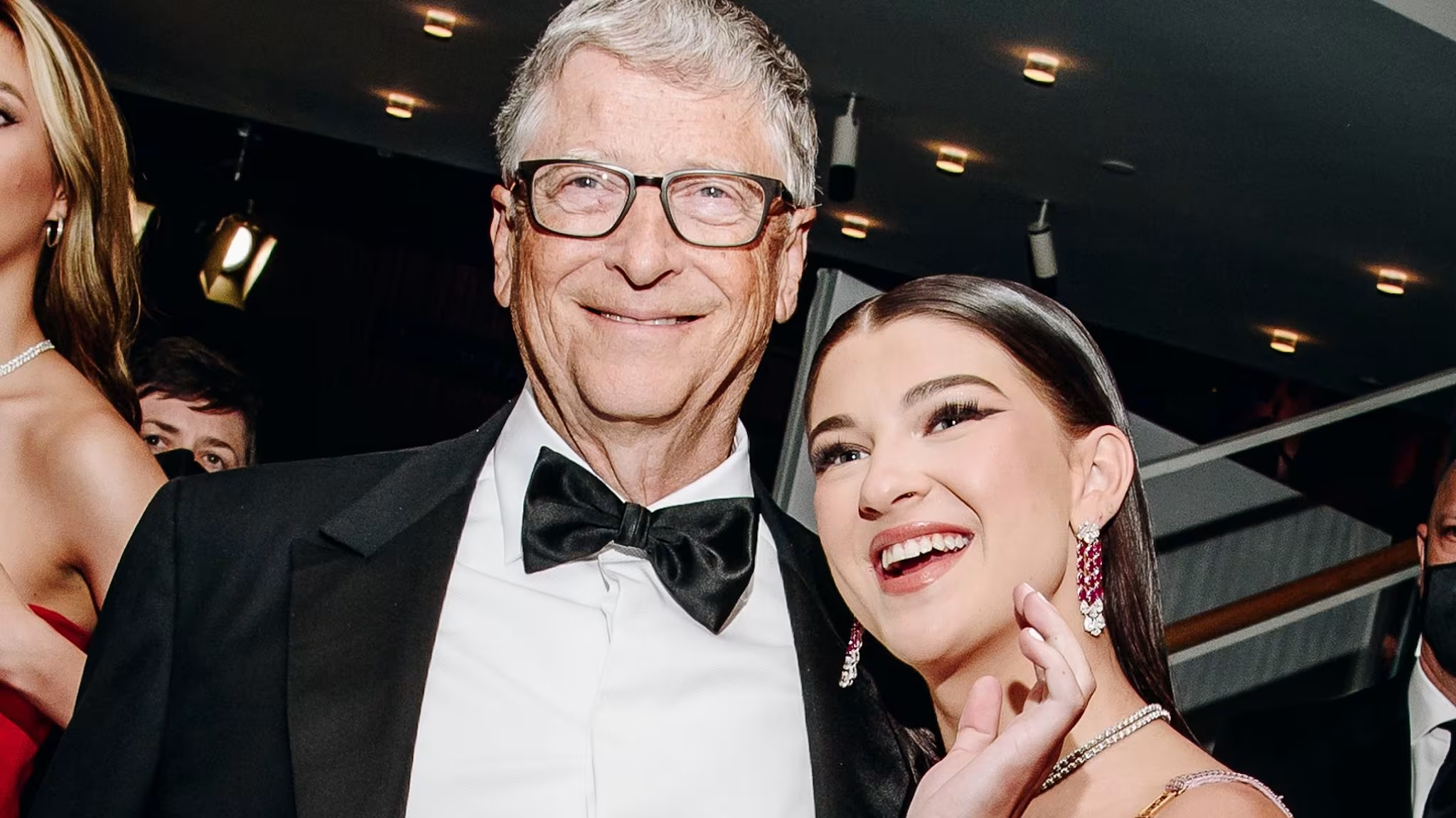
Bill Gates’ daughter Phoebe Gates built Phia as a digital shopping assistant. Now the 23-year-old co-founder is at the center of allegations involving cookie stuffing—a practice that has previously led to federal wire-fraud convictions carrying potential sentences of up to 20 years. While the younger Gates has not been charged with a crime, newly reported internal messages are raising new questions about whether Phia’s disputed commission system was an accident or something its founders knowingly pushed.
As a newly released Bloomberg podcast explains, Phia earns money by helping shoppers compare prices and collecting commissions when its referrals lead to purchases. But Bloomberg found that its browser extension could quietly open a background tab and drop a tracking cookie even when a user had not clicked a Phia link. That move could let the company take credit for a purchase it did nothing to generate, while potentially cutting out the affiliate that actually sent the shopper to the retailer.
In a December 18 message, Gates reportedly asked an employee to “confirm auto pop for cookie drop is live on ALL sites w a coupon” so Phia could monetize all gross merchandise volume. When an engineer warned that automatically dropping cookies could be “against compliance,” co-founder Sophia Kianni allegedly replied, “Whatever we can do to keep these cookies dropping will be amazing thank you.”
Those exchanges appear to undercut Phia’s earlier claim that the activity resulted from “technical anomalies” discovered only after reporters from Bloomberg contacted the company.
That is a major problem for a startup whose pitch went well beyond finding cheaper clothes.
Gates has repeatedly presented Phia as proof that she could build a company without leaning on her father’s famous name. Launched in April 2025, the platform raised more than $43 million and attracted celebrity investors including Khloé Kardashian and Hailey Bieber.
The money trail also makes the allegations harder to brush aside. Cookie stuffing reportedly accounted for an estimated 51 percent of the merchandise value Phia claimed credit for selling in June. After the disputed features were shut down, its average daily revenue plunged from approximately $80,000 to somewhere between $10,000 and $28,000. Phia disputed the 51 percent estimate, saying the analysis used a flawed methodology, and said the revenue decline also reflected its decision to pause most monetization efforts.
Affiliate platform Impact.com suspended Phia from its marketplace, while the startup said it removed the disputed features on July 7, would reverse affected transactions, and planned to hire a head of compliance. Nike and Nordstrom were reportedly among the retailers affected.
Cookie stuffing is not some obscure tech-industry technicality. Former eBay affiliate Shawn Hogan was sentenced to five months in federal prison in 2014 over a scheme that allegedly took $28 million in marketing fees.
Corporate attorney Ariel Givner said similar conduct could expose Gates to a maximum of 20 years in prison, plus fines and restitution, if federal wire-fraud charges were brought and resulted in a conviction.