Key Takeaways
- King Oyo Nyimba Kabamba Iguru Rukidi IV of Uganda’s Tooro Kingdom died at 34 after a three-decade reign that began when he was crowned at age 3.
- The cultural leader represented more than two million people in western Uganda and championed education, HIV/AIDS awareness, conservation, tourism, and youth development.
- The kingdom has not disclosed his cause of death and will name his successor according to Tooro customs, with funeral plans still forthcoming.
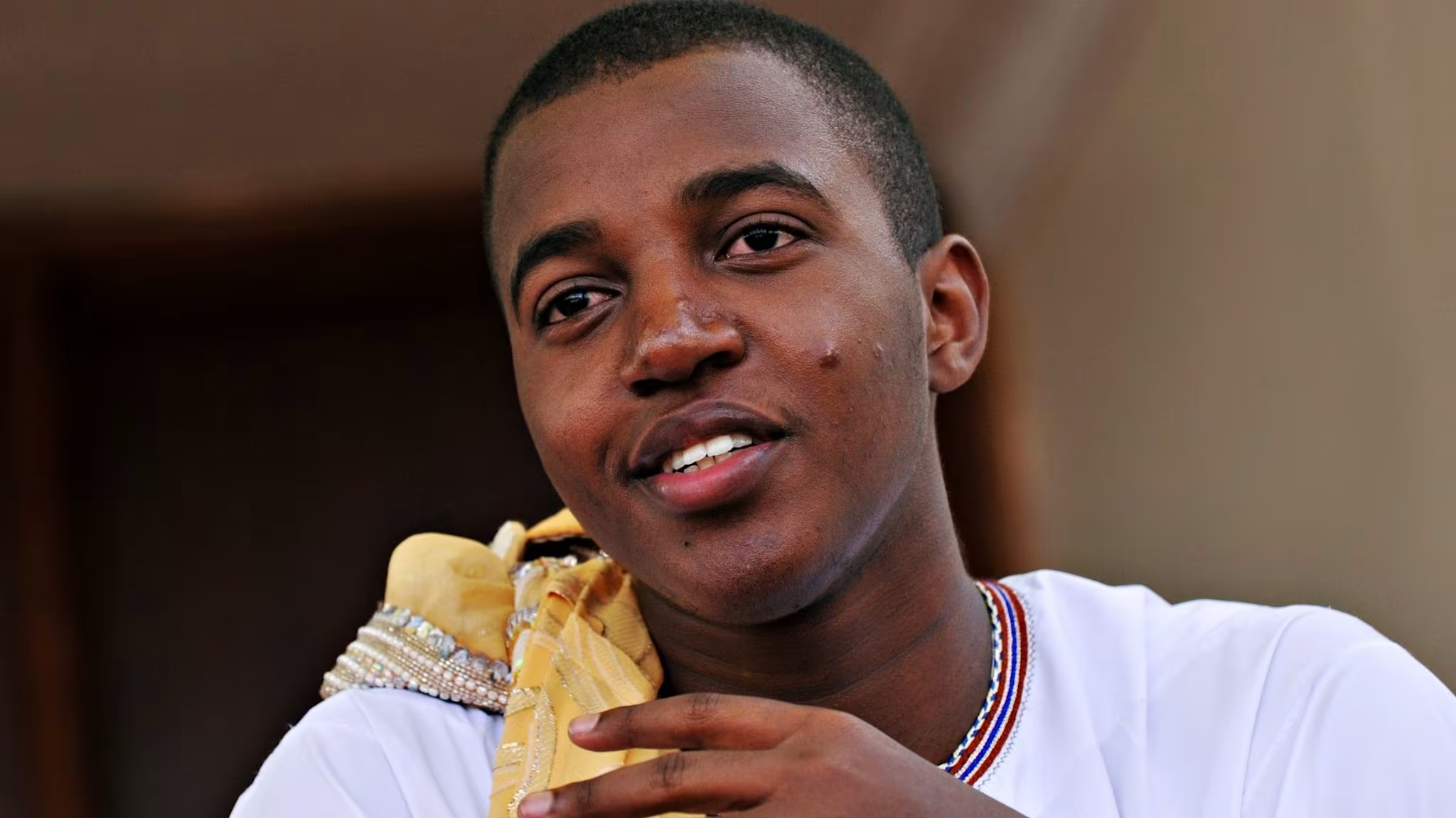
King Rukidi IV, the Ugandan monarch who was crowned at just 3 years old, has died at age 34. The Tooro Kingdom announced that Oyo Nyimba Kabamba Iguru Rukidi IV died at approximately 10 p.m. local time on Thursday, August 27, bringing his three-decade reign over one of Africa’s historic kingdoms to an abrupt end.
According to People, the kingdom did not disclose a cause of death. A Ugandan government minister said King Rukidi had been critically ill and was receiving treatment in the United States. Tooro Prime Minister Calvin Armstrong Rwomiire Akiiki called his death an “immeasurable loss” and urged the kingdom’s people to “remain united, calm and prayerful.” Funeral plans will be announced later, and the identity of the king’s heir will be revealed in accordance with Tooro customs.
King Rukidi inherited the crown after his father, King Patrick David Matthew Kaboyo Olimi III, died suddenly in August 1995. Born on April 16, 1992, the young royal was crowned that September and entered the Guinness World Records as the world’s youngest reigning monarch.
Photographs of the toddler sitting on an oversized throne became an enduring image of his reign, but his accession also carried the weight of a dynasty stretching back nearly two centuries.
The ceremony surrounding his rise was rooted in traditions far older than the child performing them. King Rukidi sounded the sacred Nyalebe drum as part of the coronation rites and participated in rituals intended to establish his right to rule.
Because of his age, a regency made up of relatives and other senior figures oversaw royal affairs during his childhood. He formally assumed full control of the kingdom during a coming-of-age ceremony in 2010, one day after turning 18.
As Omukama, or king, Rukidi served as the cultural leader of more than two million people in western Uganda. The position carried no direct political authority, but it gave him considerable influence across education, public health, environmental conservation, responsible tourism, and youth development.
He also promoted HIV/AIDS awareness and launched the Tooro Kingdom Vision 2045, a long-range initiative aimed at improving living standards throughout the region.
His death now places renewed attention on both the future of Tooro and the unusual institution he represented. Founded in 1830 after breaking away from the Bunyoro-Kitara Empire, the kingdom survived conquest, colonial rule, and the Ugandan government’s 1967 abolition of traditional monarchies.
Tooro was restored as a cultural institution in 1993, just two years before Rukidi took the throne as a toddler.




