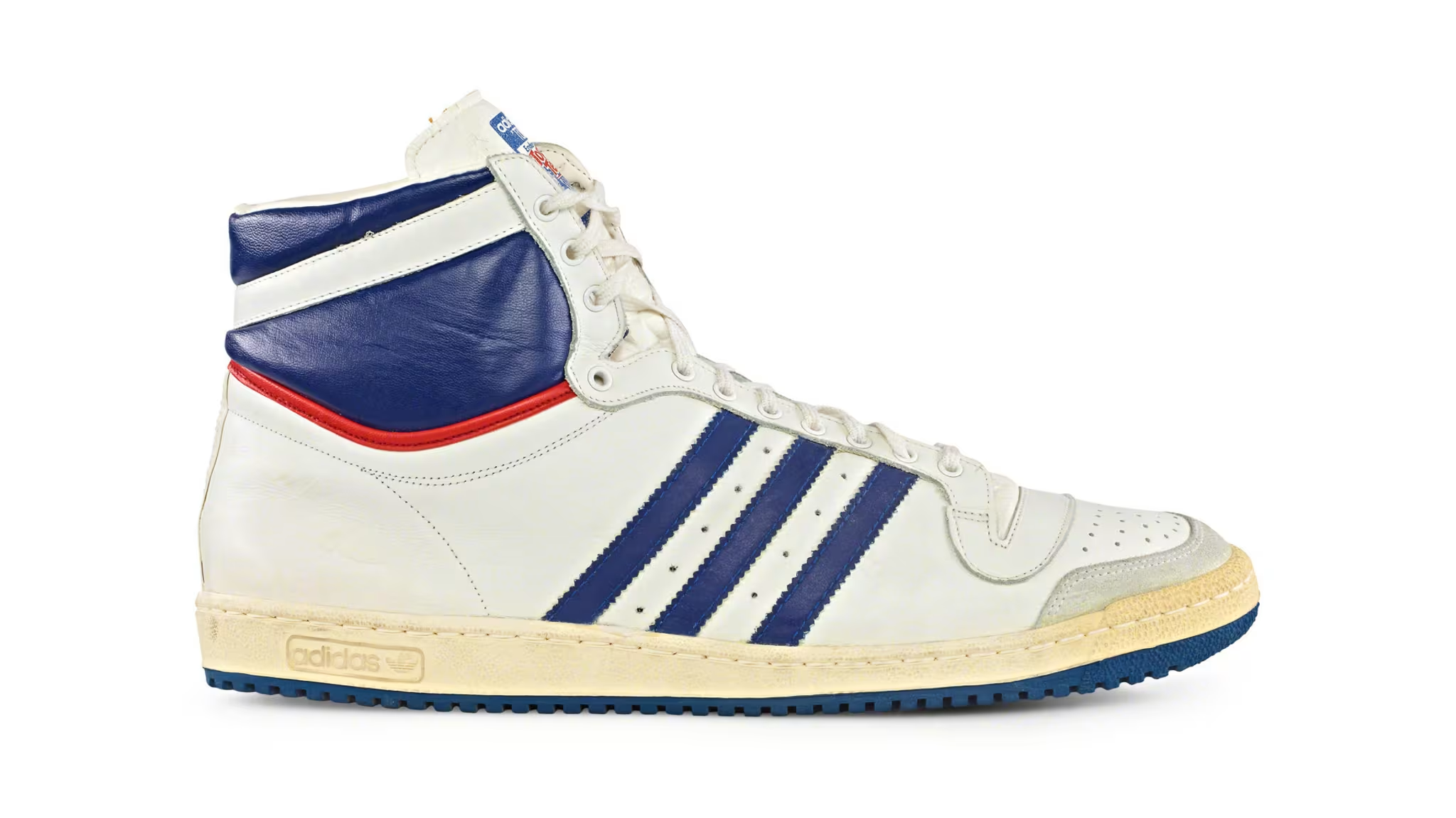
An original adidas Top Ten sneaker from 1979
It started as a performance shoe for all five positions on the basketball court, but it went on to usher in the next era of sneakers. The adidas Top Ten is back at Foot Locker and, before you cop a pair, it’s time to learn a little about the shoe that modernised sneakers.
Sometime between 1978 and 1979, the basketball deities decided the time was right. A switch flipped and a new era was born. The NBA moved from an afterthought to one of the world’s most-watched competitions. Two rookies entered the league; one at the Lakers, the other at the Celtics, and a decades-long rivalry was reinvigorated. The Jazz moved to Utah. The Clippers moved from Buffalo to San Diego. Soon-to-be commissioner David Stern joined the head office. A competitive new owner in Los Angeles made his presence felt. The pieces were falling into place, forging the NBA we know today.
It was an era of new energy, new superstars and new ideas like the Dunk Contest, and the innovation wasn’t limited purely to the on-court product. Sneaker tech was also developing quickly. ‘70s basketball had been dominated by adidas; the Three Stripes had been entrenched in the land of Stars & Stripes since the Superstar entered the league in 1969.
We were around 45 years away from adidas’ Yeezy deal but, in ‘69, the league was becoming harder, better, faster and stronger. The Superstar’s cup sole and toe cap was just what the players needed. In the years that followed, adidas continued to lead the league in innovation, introducing the Campus in 1970 and the Nizza in ‘75. Each sneaker represented a different playing style; the high-cut Nizza for the big boys in the paint, the Campus for the cutters and slashers, the Superstar for the finesse players.
In 1979, adidas switched up the strategy and made moves to become an all-encompassing force on the hardwood. Up until now, their basketball sneakers were designed with specific roles in mind. But what if there was one sneaker that ticked all the boxes? A sneaker for any player in any position.
The brand recruited versatile superstar Rick Barry to assist in the design of the new sneaker. A 6’7” small forward who could dominate on both ends of the court and get you as many assists as rebounds on any night? There was no better player in the NBA to consult with on a positionless sneaker.
The then-unnamed model was conceptualised, tested and refined by Barry and the adidas team before the final touches were added. At the time, tying an athlete to a shoe to create a ‘signature sneaker’ was not a common thing. Rick Barry had assisted with the design of the shoe, and a Rick Barry signature model was a possibility – but adidas were thinking bigger. They enlisted their top ten NBA ballers to wear the new sneaker. This wasn’t a shoe for just one player, it was a shoe for anyone.
Doug Collins, Marques Johnson, Kermit Washington, Adrian Dantley, Bob Lanier, Bobby Jones, Billy Knight, Sidney Wicks, Mitch Kupchak, and Kevin Grevey were the players. The adidas Top Ten was the sneaker. And, as the ads would tell you, Rick Barry was the inventor.
The Top Ten was released to the public, embraced by ballers, and a legend was born.
Like the Superstar before it, the Top Ten soon became as popular on the streets as it was on the court. The playgrounds of New York City – where so much of modern pop culture was born – were awash with the Top Ten. The flashy, skilled streetballers were the influencers of the time, and soon everybody was rocking the Top Ten.
The story of the Top Ten doesn’t end there, though. Twelve years later, the Top Ten was again etched into sneaker history. In the May 1991 issue of The Source, Bobbito Garcia penned his ‘Confessions of a Sneakerhead’ feature. Widely considered to be the first ever published piece about sneaker culture, Bobbito’s landmark article namechecked several now-classic models, and specifically highlighted the Top Ten as the model that ushered in the ‘new era’ of sneakers, described by Bobbito as the “complex, super duty, high octane period”. The Top Ten was emblematic of an era that took sneakers from basic rubber and leather to specialised models with new tech to improve your game.
Now in 2022, the Top Ten is back. The icon known for its appearances on the NBA’s hardwood floors, New York’s streetball courts and the timeless pages of hip-hop bibles is back on shelves. The Top Ten will be available in several colourways, some classic, some new. You can catch the entire range online and in-store at the OG home of basketball, Foot Locker.




