Backrooms, the latest horror film phenomenon from A24 Films, is currently streaming on Amazon and Apple TV. Directed and conceived by digital content creator Kane Parsons, it's based on 4chan-originated creepypasta that Parsons subsequently turned into a series of viral short films. He began making those films when he was 16; A24 gave him the green light and bankrolled this feature film when he was 19. And now, at 21 years old, he's on top of the world, as the youngest director to have a number one film at the North American box office.
Watching Backrooms in isolation, with no expectations for what you're about to see, can be a puzzling, even disappointing experience. This movie is deliberately vague, providing no clear explanation of its central mystery. But if you dig deeper—into the Internet lore that preceded the film and the Easter eggs in the film itself—you'll find some closure and resolution.
Here are 15 trivia facts and Easter Eggs you might have missed in Backrooms. Whether you're about to watch this movie for the first time now that it’s streaming on HBO Max and want a little context, or you just finished watching it and want to know what the hell just happened, we've got you covered.
Shop for WWE on Complex
Liminal space
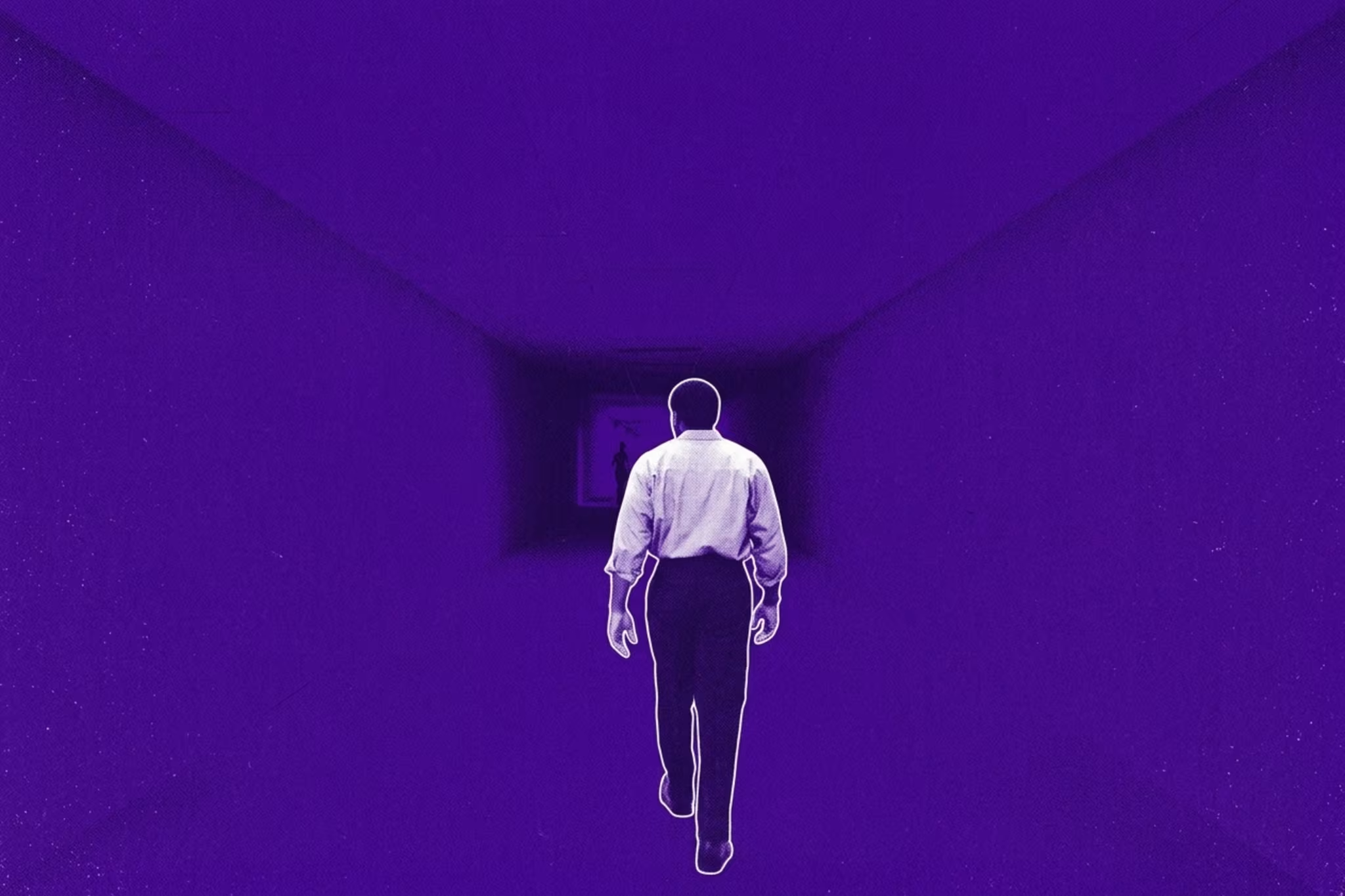
The main source of horror in this movie is the concept of liminal space. In Internet parlance, this refers to the unsettled, uncanny feeling that one gets when alone in a space that is usually furnished or filled with people. The original Backrooms meme image from 4chan is the most relevant example of this. But there are also many examples of this phenomenon in horror films, such as the abandoned urban spaces in zombie films.
The world also got an up-close-and-personal experience with liminal space during the COVID-19 pandemic, when eerie images of empty streets and bridges dominated the news while the entire world self-quarantined.
What’s ASYNC up to?
The company in hazmat suits investigating the phenomena of the Backrooms is ASYNC. Originally a builder of MRI machines, the company pivoted to doing research on Low Proximity Magnetic Distortion technology as a means of gaining access to the Backrooms. The company operates with knowledge and funding from the federal government.
More lore
There's a lot of lore building on Kane Parson's YouTube channel. This includes test footage of the magnetic technology, training videos for interacting with the Backrooms, and sightings of malevolent forces roaming the hallways. There's even an autopsy for a corpse that's been recovered from the Backrooms.
If you haven't seen this movie yet, make sure to watch these videos first. They'll help set the stage for what's happening in the film, and they also establish that the Backrooms aren’t unique to Clark. And if you've already seen the movie, go ahead and watch them all anyway. They'll clear up most of the confusion.
This seems familiar
The movie's opening is a timestamped video of an ASYNC scientist getting attacked by a monster while surveying the Backrooms. It is recorded from a first-person, shaky-cam viewpoint and matches the other found-footage short films that Parsons made. After the title screen, the movie then pivots to more traditional narrative storytelling. But this intro centers the story around its original, viral roots.
Cap’n Clark imagery
The Backrooms have already started manifesting distorted versions of Clark's memories. In this shot, we see nautical steering wheels embedded in the walls and ceilings, a reference to Cap'n Clark's Ottoman Empire furniture store.
More Cap’n!
We also see the tropical background from his pirate commercials in the final room, but in this version it’s on all four walls of the enclosed space, creating a sense of claustrophobia.
Mary’s childhood
Unlike many modern movies, which assume low media literacy and hit the audience over the head with the plot, Backrooms has a lot of non-verbal, visual storytelling. Through a series of disconnected dreams and flashbacks, we learn that Mary had a traumatic childhood, with a shut-in mom who kept her inside at all times.
We later see that the mom was institutionalized. And we also see that adult Mary, who inherited her mom's home, eventually sells it. She watches it being torn down, and if you take a closer look at the signage, it seems as though it's being bulldozed to make room for luxury apartment housing.
Architecture dreams
The central theme of Backrooms (and the film's biggest contribution to the overall lore) is that the Backrooms absorb people's traumas, memories, and repressed frustrations, which then persist in a distorted, grotesque form even after people leave the Backrooms. Clark never realizes his dream of becoming an architect. And although we see him directly address this frustration during his therapy sessions with Mary, we also see little clues sprinkled throughout the set design. In this shot of Clark in his office, you can see hand-drawn building designs pinned to the wall. Clark doodles angular designs while at work, another subconscious manifestation of his failed goals.
Architecture t-shirt
In this shot, we see Clark wearing a t-shirt from an architectural conference he probably attended when he was younger. It reinforces the prior imagery, and it also juxtaposes with his current living situation—divorced and living in the showroom of his failing furniture store.
Abstract rooms
We can see Clark's architectural dreams manifesting in the rooms themselves, which have a variety of sizes, shapes, narrow spaces, and inclines. There's even a tiny door at the end of a vanishing point, which looks like a sketch artist's two-dimensional depiction of a three-dimensional space.
The fax number
According to Reddit, the fax number in the Cap'n Clark commercial works, and if you fax it, you'll receive a response in about 5-10 minutes. It used to be a flyer for the store itself, but it has apparently changed to several different things since April.
The movie on TV
The ASYNC employee and his family are watching 1984’s The NeverEnding Story on television, a wry reference to the never-ending nature of the Backrooms. Like Backrooms, The NeverEnding Story also explores a fantasy realm sustained by a person's imagination.
A copy of a copy of a copy
The film's most dramatic shot occurs near the end, when we see Mary's childhood home being deconstructed as the camera descends into deeper levels of the Backrooms. It's our clearest visual representation of how the Backrooms misremember, distort, and subsequently reconstruct memories in frightening ways.
Pirate Feast
Backrooms argues that an unwillingness to deal with or confront trauma will metastasize those traumas and isolate the victim. Clark says himself that he wants to stay in the Backrooms, probably because they confirm his distorted view of the world. Mary's affirmation of that decision causes Clark to free Mary and let her go. And it's in this moment, when he shows some level of accountability, that the pirate monster, which represents all his anger and need to blame others, subsumes and kills him.
We can also see that it rips off Clark's left leg, the same one he was hiding under a peg leg during his pirate commercial.
Mary’s turn
We see distorted, Mary-themed rooms at the end of the film, including bizarre depictions of her office, childhood home, and bedroom. The final shot of the movie shows a distorted version of Mary herself. The Backrooms have now taken hold of Mary's traumas, it seems. Will she ultimately be trapped? Hopefully, Mary can find a healthier, more self-loving solution than Clark did.