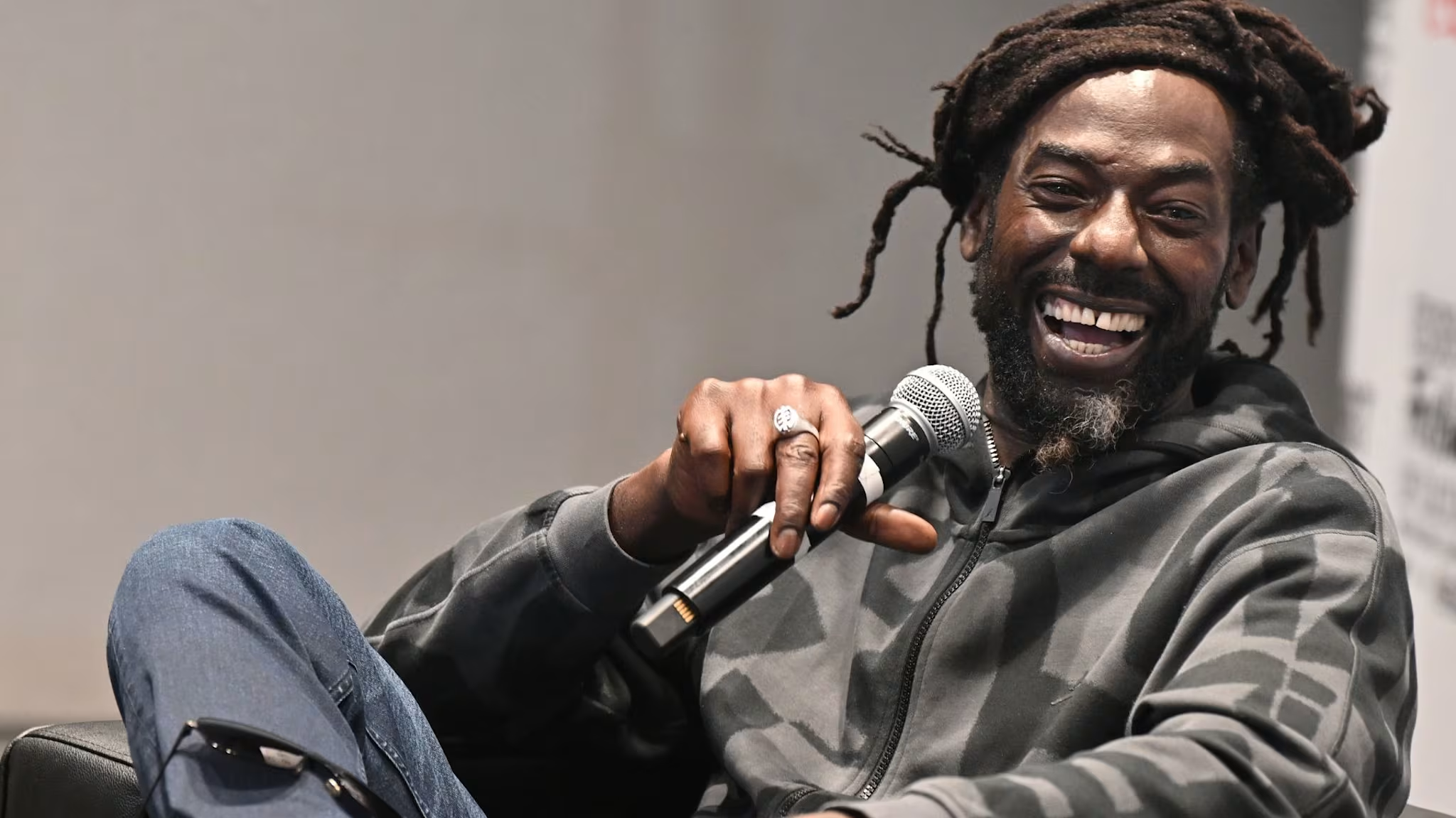
Buju Banton is back—and he has something to say about the state of dancehall. The Jamaican heavyweight released his 14th album, Too Too Bad, on July 17 through VP Records and is gearing up for his first tour with Stephen Marley.
Too Too Bad moves between dancehall’s roots and its next chapter. “Butterflies” flips the classic “Real Rock” riddim, while “X-Rated” attacks DJ Mac’s newer “WYFL” riddim. Buju built the album to move, but he also wants it to remind listeners where the sound came from. “It was made with a lotta ingredients called love, a lotta ingredients called dancehall, and a lot of ingredients called vibes,” he told VIBE.
Born Mark Anthony Myrie in Kingston in 1973, Buju went from singing at local shows to dominating Jamaican music. In 1992, he broke Bob Marley’s record for the most No. 1 hits in Jamaica in a single year. His Mr. Mention album became a dancehall landmark, while his gravel-heavy delivery made him impossible to confuse with anyone else.
Then came ’Til Shiloh. The 1995 classic pushed Buju beyond party records, mixing dancehall heat with roots reggae, Rastafarian faith and street-level storytelling. Songs like “Champion” and “Untold Stories” cemented him as more than a hitmaker. Three decades later, he is still defending dancehall’s foundation—even as a younger generation experiments with trap-influenced production.
His verdict on the “trap dancehall” label? Rejected. “You cannot trap dancehall,” Buju said. “They tried to trap us then, and we escaped that.” He made room for young artists to innovate but drew a hard line around the genre’s identity. “It’s dancehall, but it’s their way of doing it,” he added. “They can’t change the name.”
Buju’s return carries history. He was arrested on federal drug charges in 2009, convicted in 2011, and released in December 2018. While incarcerated, Before the Dawn won the Grammy for Best Reggae Album. Since returning to Jamaica, he has reclaimed the stage and worked with names including DJ Khaled, Snoop Dogg, Kanye West, and Busta Rhymes.
Now he is taking the show on the road with Stephen Marley. Buju called their first joint tour “a musical gala” built around “a spirit of unity.”




