Key Takeaways
- Gloria Steinem, the journalist and activist who became a defining leader of modern feminism, died at 92 in her New York City home.
- Steinem connected gender inequality to racism and economic injustice, working alongside Black feminist Dorothy Pitman Hughes and challenging the erasure of women of color from feminist history.
- Her career included an undercover Playboy Club exposé, co-founding Ms. magazine, decades of advocacy for bodily autonomy and workplace equality, and receiving the Presidential Medal of Freedom in 2013.
Gloria Steinem, the journalist and activist who became one of the most recognizable leaders of the modern women’s movement, has died at 92. Steinem died on Wednesday, September 2, at her New York City home while surrounded by loved ones, according to a statement shared on her official Instagram account. A cause of death was not disclosed.
“Gloria’s near-century on earth were years well-lived, and she continued working for equality until the very end,” the statement read. Her representatives told NBC News that Steinem was a curious, funny, and fiercely independent organizer who regularly opened her home for “Talking Circles” and other social justice gatherings. Supporters were encouraged to light a candle in her honor or donate to Gloria’s Foundation.
Steinem’s legacy stretches far beyond her status as the public face of second-wave feminism. She consistently argued that gender inequality could not be separated from racism, economic injustice, or the systems that controlled women’s bodies.
“Racism requires sexism, and vice versa,” she once said, connecting racial hierarchy directly to the policing of reproduction.
She also rejected attempts to frame feminism as a movement created and led exclusively by white women.
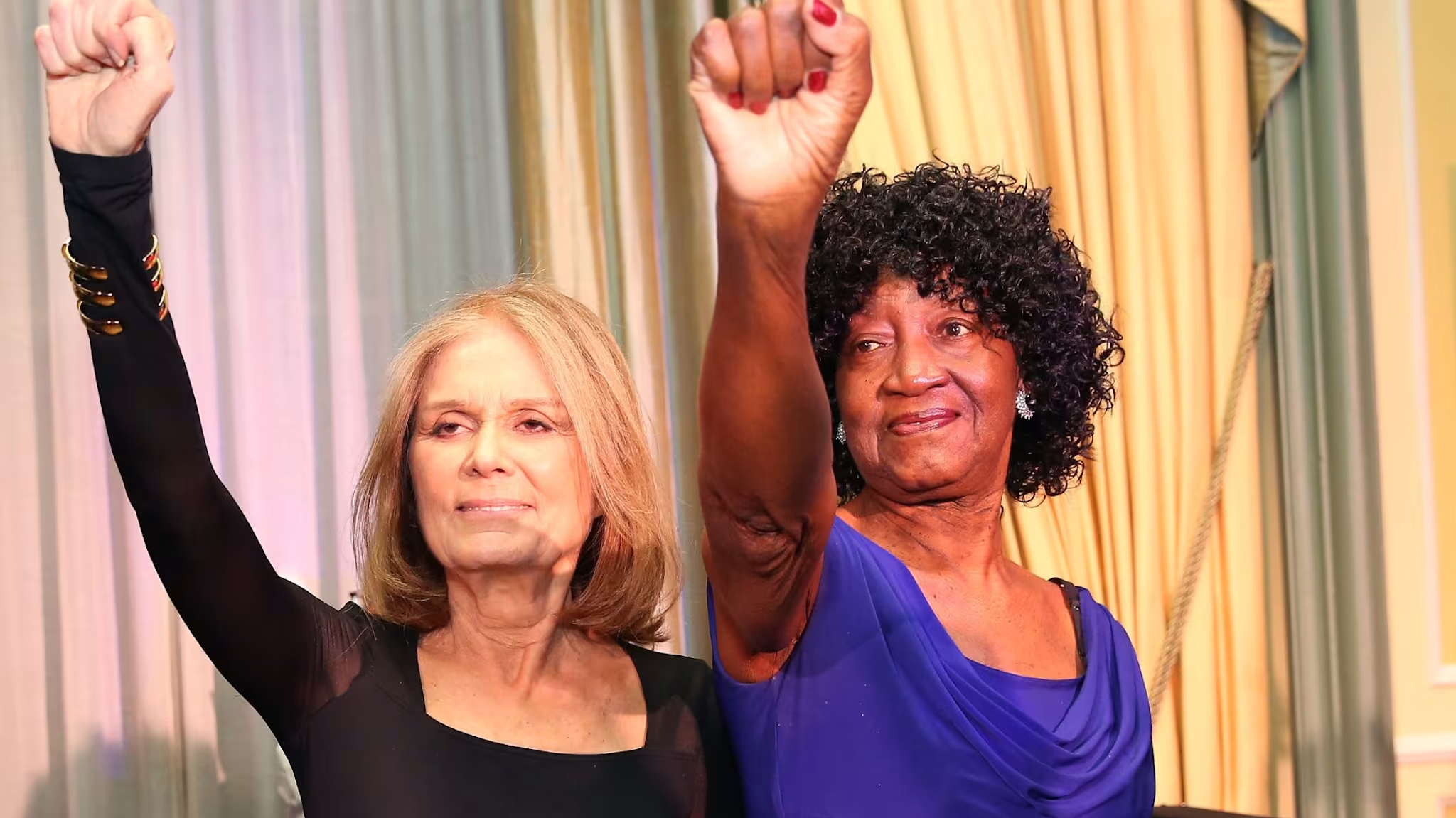
One of the defining images of that approach came in 1971, when Steinem was photographed alongside pioneering Black feminist Dorothy Pitman Hughes with both women raising their fists in a Black Power salute.
Shot by Dan Wynn for Esquire, the portrait became an enduring image of the women’s liberation movement and is now held by the National Portrait Gallery. Pitman Hughes—who co-founded the Women’s Action Alliance and National Black Feminist Organization and established a multiracial child-care center in New York—toured the country with Steinem during the early 1970s, speaking about the overlapping realities of race, gender and class.
Years later, Steinem continued pushing back against the erasure of that history. “Women of color in general—and especially Black women—have always been more likely to be feminist than white women,” she said in a 2017 interview. “The problem I have with the idea that the women’s movement or the feminist movement is somehow a white thing is that it renders invisible the people who have always been there.”
She frequently cited Black women’s central role in shaping sexual-harassment law and bringing workplace abuse into public view.
Born in Toledo, Ohio, in 1934, Steinem rose to national attention after going undercover as a Playboy Bunny for a 1963 exposé documenting the exploitative conditions women faced inside Playboy Clubs.
She later became a founding editor of New York magazine and co-founded Ms. magazine in 1971. Her activism spanned reproductive freedom, domestic-violence prevention, workplace equality, child welfare, and women’s political representation.
President Barack Obama awarded her the Presidential Medal of Freedom in 2013.
Steinem remained politically and culturally engaged well into her later years, insisting that bodily autonomy was fundamental to democracy. “The fact that our bodies belong to us, that’s the beginning of democracy in my view,” she said.