Key Takeaways
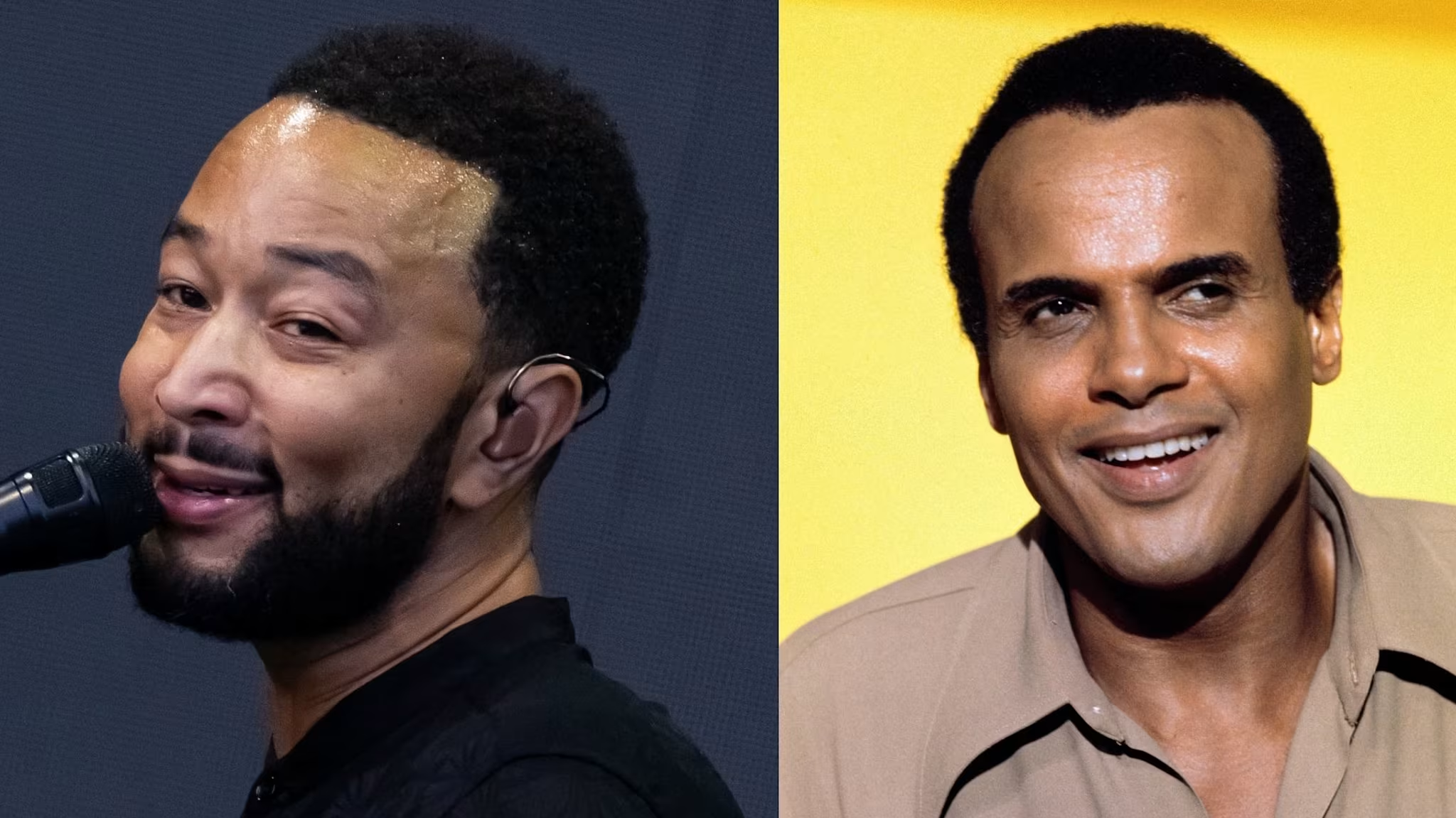
- John Legend will portray Harry Belafonte in Bill Condon’s biopic The Road Home, which centers on musicians who used their fame to fight South African apartheid and the political storm around Paul Simon’s Graceland.
- Thabo Rametsi stars as exiled trumpeter Hugh Masekela, with Cynthia Erivo as Miriam Makeba, Guy Pearce as Archbishop Trevor Huddleston, and Johnny Flynn as Simon, as the film tracks their split over supporting the Graceland sessions during the UN cultural boycott.
- The story highlights Belafonte’s decades of frontline activism—from mentoring Masekela and Makeba to protests, fundraising, and protest albums—with Legend calling it a “privilege” to embody a friend and mentor who set the standard for artist-activists.
John Legend will play Harry Belafonte in The Road Home, an upcoming musical drama about the musicians who turned their fame into a weapon against South African apartheid. Bill Condon will direct the film, which places Belafonte inside the political firestorm surrounding Hugh Masekela, Paul Simon and the making of the Graceland album.
According to Deadline, Thabo Rametsi leads the cast as Masekela, the jazz trumpeter forced into exile after the 1960 Sharpeville Massacre. Cynthia Erivo will portray Miriam Makeba, with Guy Pearce playing anti-apartheid advocate Archbishop Trevor Huddleston and Johnny Flynn appearing as Simon. Production is now underway in South Africa.
Belafonte was no background player in Masekela’s story—or in the global movement against apartheid. After meeting Masekela in New York during the early 1960s, he became the young musician’s mentor, financial supporter and powerful industry ally.
Belafonte also helped Makeba establish herself in the United States before the pair released the Grammy-winning 1965 album An Evening with Belafonte/Makeba, a direct musical attack on South Africa’s racist regime.
Legend knew Belafonte personally and credits him with establishing the standard for artists who treat activism as part of the job. “I was honored to know Mr. Belafonte as my friend, mentor and collaborator in the struggle for justice,” he said. “He was an incredible human being who lived a monumental, revolutionary life.”
He added, “I count it a privilege to be entrusted with the role of Harry Belafonte in this special film.”
That legacy puts Belafonte at the center of the conflict driving The Road Home. The film follows Masekela as he breaks with Huddleston and joins Makeba to support the musicians behind Simon’s Graceland. The album became a worldwide smash, but Simon faced accusations that recording in South Africa violated the United Nations’ cultural boycott.
Belafonte urged his friend to consult the African National Congress before recording in South Africa, advice Simon did not follow. The dispute forced artists on the same side of the anti-apartheid struggle to confront a volatile question: Could working with Black South African musicians amplify their resistance without legitimizing the system oppressing them?
Belafonte’s answer was backed by decades of action. He was arrested outside the South African Embassy during a 1985 protest, raised millions for anti-apartheid organizations, and released the pointed 1988 protest album Paradise in Gazankulu.
He also ensured that the mission behind “We Are the World” extended beyond famine relief to African political solidarity. After Nelson Mandela walked free in 1990, Belafonte organized and chaired his first U.S. fundraising tour.




