Blank pixel used during image takedowns
Are you a sneaker collector? (Maybe this piece will help you figure that out.) Do you want to be one? Well, you came to the right place. We're not going to tell you exactly what sneakers you should own—a collection should bear the indelible mark of the individual collector—but we WILL tell you some categories that should be represented in a well-rounded collection. Pair this piece with this one, and you'll be off to a good start. And even if your personal preferences take you off in an entirely different direction, this start will give your collection solid roots steeped in sneaker history. Check out 10 Sneakers Every Serious Collector Should Own and let us know your must-haves below.
RELATED: What Makes You a Sneaker Collector?
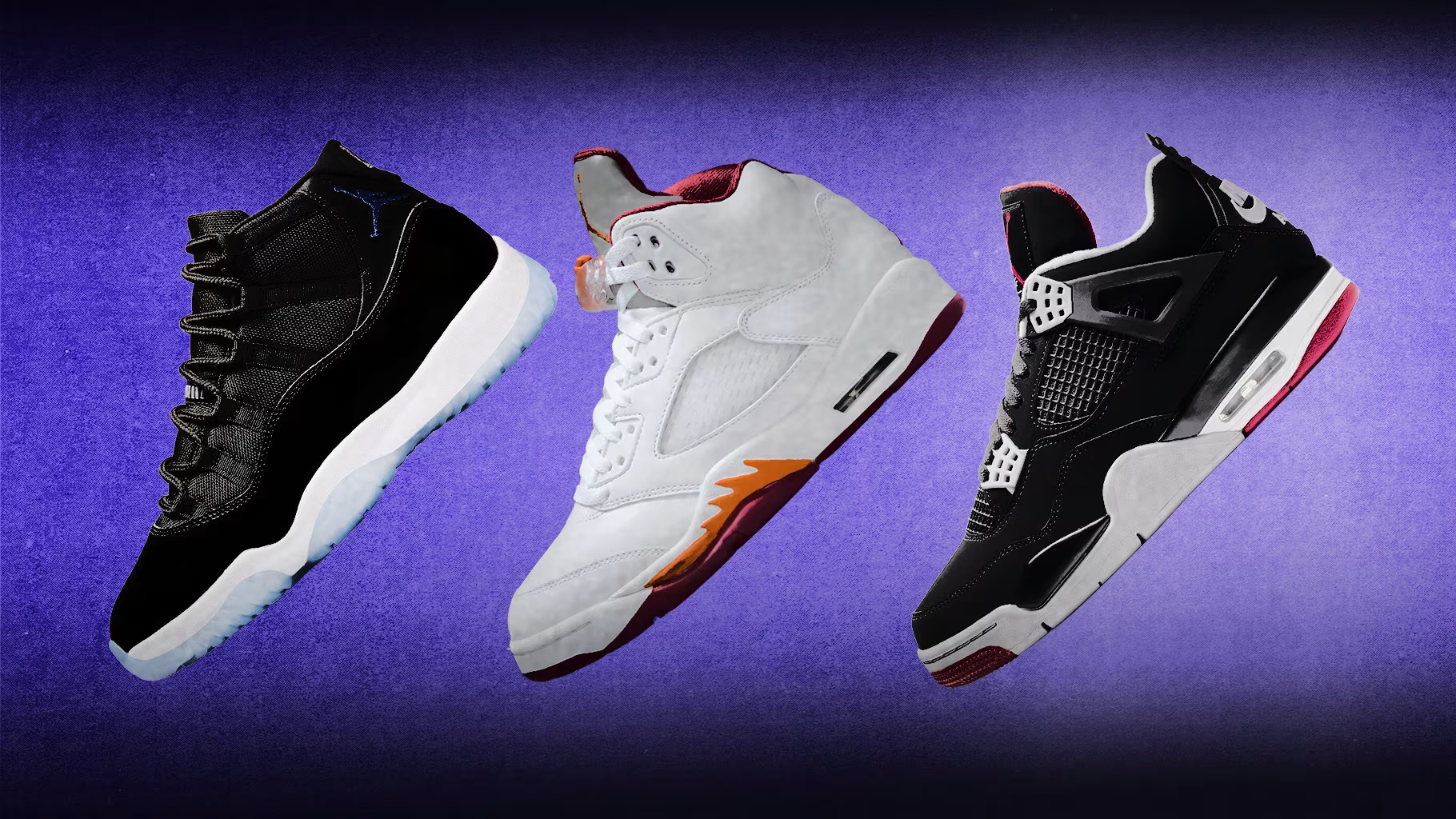
A pair of Air Jordans with "Nike Air" branding.
Approximate Value: $140-1,000
The "Nike Air" Jordans most people think of first are the III, IV, V and VI thanks to their not being produced that way since the late '90s/early '00s. But those midsoles were notoriously fragile, and even the retros are borderline unwearable now. (The '88 IIIs being the lone exception.) But there are other choices, from the recent barrage of Is to readily-available original Xs and XIs. Remember your roots.
A pair from a defunct (or once-defunct) brand.
Approximate Value: $25-100
Once sneakers gained traction as a fashion statement and started bringing in big money, plenty of companies sprouted up to capitalize on the new boom. From Avia to Roos, everyone thought they had the key to sneaker success. Most didn't. Nike and adidas had staked their claim early and backed it up with zillions of marketing dollars, ensuring they could take on any newcomers. Many newer brands exploded like fireworks, and went away almost as quickly. Some of these brands have been revived, but it's hard to imagine their second (or third, or fourth) lives lasting much longer than their first.
A pair of Reebok Pumps.
Approximate Value: $150-300
1989's Reebok The Pump helped usher in the technology wars of the '90s, where damn near every sneaker had to have some sort of gimmick. Not that Pump was intended as a gimmick—it had a function, but it was also an easily visible piece of tech that served as an obvious selling point. And while others, like L.A. Gear's Catapult and Converse's React Juice, faded away, the Pump lives on.
A pair of Nike Cortez that came in the first orange box.
Approximate Value: $200-400
The Nike Cortez was the sneaker that changed the trajectory of running shoes, from specialty equipment for professionals to something nearly every adult needed a pair of for "jogging." Oregon track coach and Nike co-founder Bill Bowerman had the idea of putting a wedge of EVA foam in the midsole of the Onitsuka Tiger Corsair, and a new model-and a new company-was launched. Heck, even Forrest Gump knew what was up.
A pair of New Balance that were made in the USA.
Approximate Value: $125-250
Years ago, plenty of sneakers were made in the USA. From Nike to Vans to New Balance, all manners of companies kept their production more or less in-house. Now most companies make their sneakers in the Far East, and only New Balance keeps a manufacturing base in the Northeast, where once many companies made sneakers. Even Nike had a Northeast base. Order a pair of custom 574s and support what was once a thriving industry.
A pair of Nike Foamposites.
Approximate Value: $200-500
Before Nike Foamposites became the ultimate hypebeast shoe, they represented one of the biggest technological leaps in sneaker construction. When Mike Bibby debuted the royal blue Foamposite One during the '97 NCAA championship game, no one knew what to make of them. Having a pair of those, whether in original or retro form, symbolizes the advancement that's already taken place—and where that advancement can take things.
A pair of pre-1986 Nike Air Force 1 Highs.
Approximate Value: $200-500
The Nike Air Force 1 helped establish the wider sneaker culture in NYC, and thus the world. Millions upon millions of pairs have been produced since its introduction in 1982, but it was the first run that really mattered. Long before it was bastardized into a mid, the original Air Force 1 high was a specialized piece of basketball equipment that found itself adopted by the streets. Acquire an original pair of 1982 Air Force "Zeros" with the mesh sidepanels and the non-perfed toebox and you'll have no need for any of the others.
A pair of sneakers with no laces.
Approximate Value: $50-200
Whether it be Puma Disc Blazes, the Reebok Pump Fury or something as simple as an adidas Dallas or a Vans Slip-On, plenty of sneakers have eschewed laces for alternate means of keeping them on. It has not always been a good idea. Keep a lace-free pair in your collection as a reminder that laces are still being used for a reason.
A pair of adidas with someone's face on the tongue.
Approximate Value: $100-250
Back in the '70s and into the '80s, one of the biggest honors an athlete could get was his face (or his entire body) on the tongue of a pair of adidas. It didn't happen for many people—Stan Smith, Kareem Abdul-Jabbar and Ilie Nastase being three of the most notable. The upcoming Stan Smith retro will be the truest retro yet, if you'd rather not track down a pair of originals.
A pair of Converse Chuck Taylors that were made in the USA.
Approximate Value: $150-200
Converse unbelievably went bankrupt in the late '90s, and when they were brought back to life, the Chuck Taylor All Star was no longer made in the USA. But hey, Fords are made in Mexico and Argentina now. That said, an American-made pair of Chucks is as necessary as an American-made pair of Levi's or a Schott Perfecto. There was a time when "Made in the USA" ruled the world: Imagine that.