Image via Complex Original
A lot of effort goes into making a great rap album. The lyrics have to be on point, the production needs to deliver a fresh sound, and maybe most importantly, the message in the music has to resonant with listeners. Rappers like Jay Z, 50 Cent, Lil Wayne, and more have been able to find this balance on several projects, which is why we hold them in such high regard.
Unfortunately, the same can't always be said for their album covers. Sure, a fan typically won't worry about this layer of a rapper's creative expression if the music is legit. But it's become clear that they have gotten off the hook more than they deserve to when turning in less than impressive cover art. Here's A Recent History of Great Rap Albums With Wack Album Covers. These rappers' creative teams let us down.
The LOX, We Are the Streets (2000)
Label: Ruff Ryders/Interscope
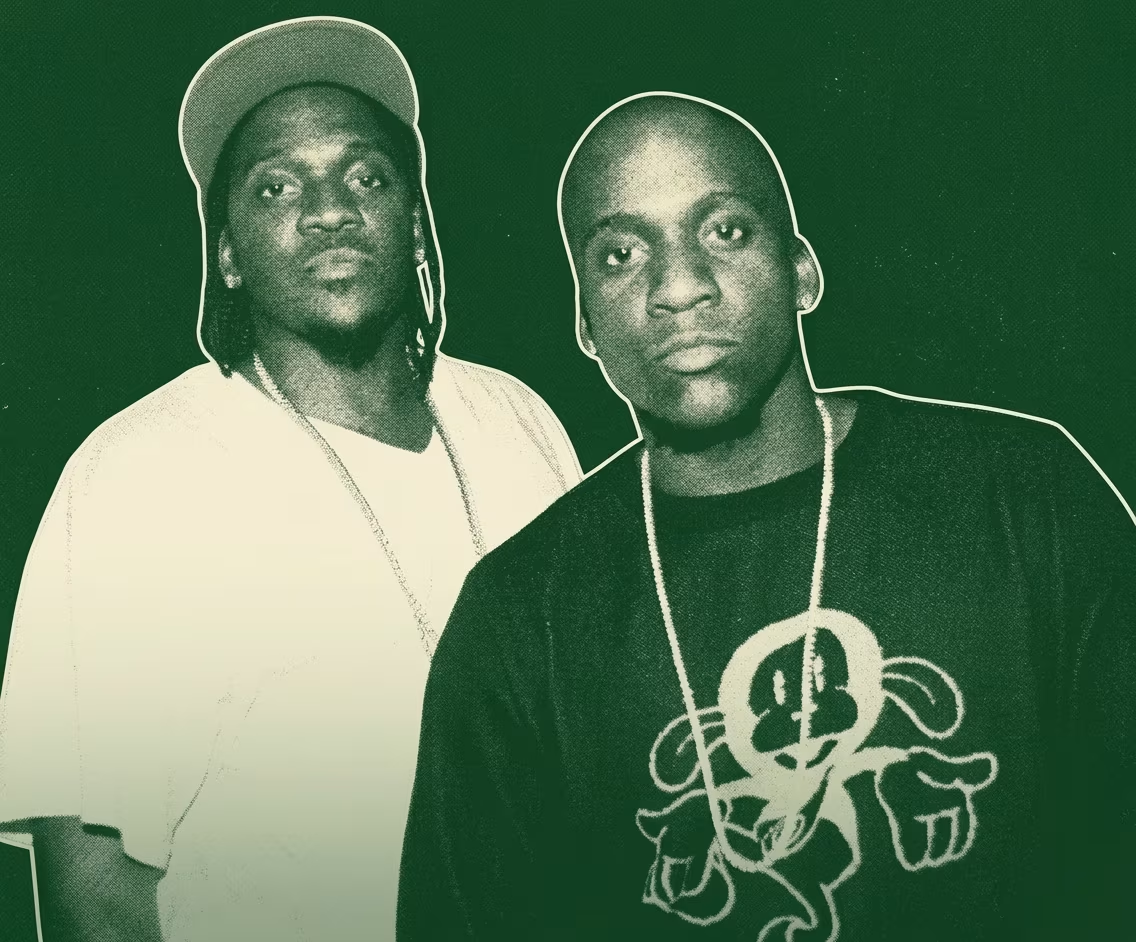
The LOX took the title of their sophomore album We Are the Streets a little too seriously as their faces look like manhole covers.
Missy Elliott, Miss E… So Addictive (2001)
Label: The Goldmind/Elektra
There's really no way to explain Missy Elliott's cover for Miss E… So Addictive without prompting even more questions. Is Missy floating underwater with naval mines? Does that make her the bomb? Is this her response to international warfare at sea? Is Missy a fan of Waterworld? Praying hands emoji that the answer to the last question is yes.
Jay Z & R. Kelly, The Best of Both Worlds (2002)
Label: Roc-A-Fella/Def Jam/Jive
Are Jay Z and R. Kelly aware that the continents of North America, South America, Europe, and Africa are actually a part of the same world? From the looks of this cover, nope.
Ghostface Killah, The Pretty Toney Album (2004)
Label: Def Jam
True, Ghostface Killah is looking super fly with his shiny medallions. But was it really necessary to use two different fonts on the cover, one uglier than the next? The real Tony Starks wouldn't approve of this.
Cam'ron, Purple Haze (2004)
Label: Roc-A-Fella/Diplomat/Def Jam
Cam'ron looking like the Dorothy Gale of Harlem.
50 Cent, The Massacre (2005)
Label: Shady/Aftermath/Interscope
This cartoon version of 50 Cent on the cover is a far cry from the visually intimidating demeanor that was present on his debut album Get Rich or Die Tryin'. Really, it looks like a rough sketch that should have been scrapped.
Birdman & Lil Wayne, Like Father, Like Son (2006)
Label: Cash Money/Universal
Birdman and Lil Wayne's names are bedazzled. That is all that needs to be said.
T.I., T.I. vs. T.I.P. (2007)
Label: Grand Hustle/Atlantic
This cover was as much as a fail as the Dr. Jekyll and Mr. Hyde spin Tip tried to push on us for his fifth album.
Common, Finding Forever (2007)
Label: G.O.O.D./Geffen
Chicago skyline aside, this album cover is all types of ridiculous. At least there was a purpose to the Electric Circus cover.
Talib Kweli, Eardrum (2007)
Label: Blacksmith Music/Warner Bros.
Evidently Talib Kweli got his inspiration for the Eardrum cover after browsing through the stereo section of a Best Buy.
Ludacris, Theater of the Mind (2008)
Label: DTP/Def Jam
Ludacris has always had a good sense of humor. But his attempt to symbolize the album title with this bizarre cover feels corny.
Drake, Thank Me Later (2010)
Label: Young Money/Cash Money/Universal Motown
If you look at this cover long enough, you'll need to upgrade your vision plan. You can thank Drake later.
Waka Flocka Flame, Flockaveli (2010)
Label: 1017 Brick Squad/Asylum/Warner Bros.
At best, this is an album cover disguised as a mixtape cover. At worst, Waka Flocka Flame didn't even know he was releasing an album.
Future, Pluto (2012)
Label: A1/Freebandz/Epic
There's nothing more disturbing than seeing Nayvadius Cash floating around the outskirts of our solar system. Space may be the final frontier, but some things are better left unknown.
Lupe Fiasco, Food & Liquor II: The Great American Rap Album Pt. 1 (2012)
Label: 1st & 15th/Atlantic
Lupe Fiasco says he chose an all-black cover as a way to challenge his label. But really, all we can think about is the memorable line in the rock music mockumentary This Is Spinal Tap when Nigel Tufnel explains the inspiration behind their own blacked-out cover.