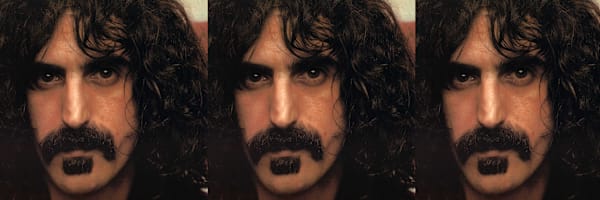


Frank Zappa

Frank Zappa

Frank Zappa (1940-1993) was one of the most important, innovative, and influential composers of the 20th century. Over the course of more than 60 albums released during his lifetime – a peerless and prolific body of work that has only since rightly doubled in size following his untimely death from prostate cancer at age 52 in 1993 – the self-taught musical pioneer both challenged and enhanced the sensibilities and expectations of music lovers and listeners the world over. No genre or subject matter were off-limits to the man who concocted the Project/Object credo in order to describe the connective tissue bonding his signature works across a variety of creative mediums. Growing up as a teenager in the 1950s, Zappa shared an affinity for doo-wop music alongside his unending admiration for the dissonant, but unique, tones of French composer Edgar Varèse and a relentless pursuit of harnessing the tenets of the avant-garde. In 1963, he appeared on “The Steve Allen Show,” making music on a pair of bicycles using only drumsticks and a bass bow. Zappa doubled down on exploring the outer reaches of popular music while sharpening his skills as a producer, bandleader, and keenly observational, and oftentimes sardonic, songwriter. In 1965, Zappa formed and led the experimental rock group The Mothers (which became The Mothers of Invention and eventually The Mothers again), whose June 1966 double LP debut album on Verve Records, Freak Out!, is routinely considered as an undisputed benchmark release of the initial rock era. Freak Out! perfectly encapsulated the goals and ideals of the counterculture that had arisen around The Mothers of Invention, but at the same time foisted Zappa’s wary eye on the lofty naivete of youth culture that ultimately went unfulfilled – core themes he frequently returned to and further developed throughout his career. Zappa exhibited an inherent knack for mining the music of the times while also consistently pushing the compositional envelope. He would work on and off with The Mothers over the ensuing decade, creating standalone releases (Burnt Weeny Sandwich) and film soundtracks (200 Motels) in kind, while also pursuing solo ventures under his own name. 1969’s Hot Rats pioneered multitracked instrumental explorations, while 1974’s Apostrophe(‘) forged his lyrical eclecticism with a laser-sharp FM rock-radio trajectory. During the balance of the ’70s on into the early ’80s, Zappa cemented his reputation as a galvanizing and endlessly inventive live performer, leading a string of talented bands responsible for a cavalcade of aural collaborations rarely heard on the live stage. Zappa scored a Top 40 hit with 1982’s spot-on satirical single, “Valley Girl,” featuring his daughter Moon Unit Zappa reciting the Southern California slang of the day. Besides mastering the art of rock, Zappa’s orchestral maneuvers took root in passion projects like 1968’s Lumpy Gravy and culminated with 1993’s magnum opus, The Yellow Shark. Zappa collaborated with renowned conductors such as Kent Nagano, Pierre Boulez and Elgar Howarth who all long-recognized that the intricacy of Zappa-composed music was, and is, always best performed note-for-complex-note by full orchestras in respected concert halls across the globe. More recently, contemporary conductors like Esa-Pekka Salonen have continued to conduct Zappa’s challenging compositions, as captured on the GRAMMY-nominated live album, 200 Motels: The Suites, which featured the Los Angeles Philharmonic and Los Angeles Master Chorale performing Zappa’s masterwork, 200 Motels, for a spectacular, sold-out, one-night-only orchestral performance. A tireless advocate of artists’ rights, Zappa sought to take control of his own recorded output, creating custom labels Bizarre, Discreet, Straight, and later Zappa Records before ultimately forming Barking Pumpkin in 1981. His displeasure for the clarion calls to censor lyrical content as undertaken by the Parents Music Resource Center (PMRC) led him to testify as an opposing witness during their much-publicized Senate hearings in 1985. A staunch advocate for the First Amendment, Zappa was one of three artists to testify before the Senate Commerce, Science and Transportation Committee on "record labeling.” In his statement, Zappa railed against censorship and advocated for an artist’s right to create without exception, stating, “The PMRC proposal is an ill-conceived piece of nonsense, which fails to deliver any real benefits to children,” continuing that it is “the equivalent of treating dandruff by decapitation.” Zappa’s dual iconic and iconoclastic status was further feted by Czech president Vaclav Havel, who appointed him as Cultural Ambassador to Czechoslovakia in 1990. Among his many honors, Zappa was posthumously inducted into the Rock and Roll Hall of Fame in 1995 and received a GRAMMY Lifetime Achievement Award in 1997.
About 
Frank Zappa

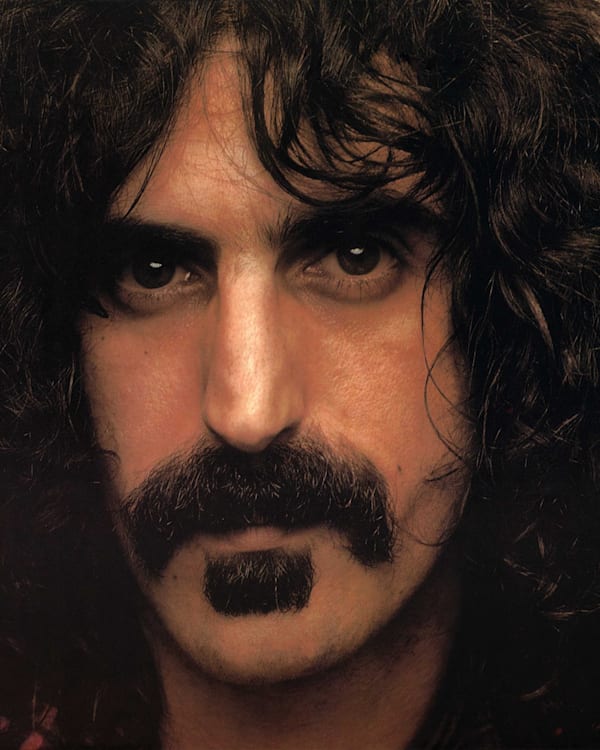
Frank Zappa (1940-1993) was one of the most important, innovative, and influential composers of the 20th century. Over the course of more than 60 albums released during his lifetime – a peerless and prolific body of work that has only since rightly doubled in size following his untimely death from prostate cancer at age 52 in 1993 – the self-taught musical pioneer both challenged and enhanced the sensibilities and expectations of music lovers and listeners the world over. No genre or subject matter were off-limits to the man who concocted the Project/Object credo in order to describe the connective tissue bonding his signature works across a variety of creative mediums. Growing up as a teenager in the 1950s, Zappa shared an affinity for doo-wop music alongside his unending admiration for the dissonant, but unique, tones of French composer Edgar Varèse and a relentless pursuit of harnessing the tenets of the avant-garde. In 1963, he appeared on “The Steve Allen Show,” making music on a pair of bicycles using only drumsticks and a bass bow. Zappa doubled down on exploring the outer reaches of popular music while sharpening his skills as a producer, bandleader, and keenly observational, and oftentimes sardonic, songwriter. In 1965, Zappa formed and led the experimental rock group The Mothers (which became The Mothers of Invention and eventually The Mothers again), whose June 1966 double LP debut album on Verve Records, Freak Out!, is routinely considered as an undisputed benchmark release of the initial rock era. Freak Out! perfectly encapsulated the goals and ideals of the counterculture that had arisen around The Mothers of Invention, but at the same time foisted Zappa’s wary eye on the lofty naivete of youth culture that ultimately went unfulfilled – core themes he frequently returned to and further developed throughout his career. Zappa exhibited an inherent knack for mining the music of the times while also consistently pushing the compositional envelope. He would work on and off with The Mothers over the ensuing decade, creating standalone releases (Burnt Weeny Sandwich) and film soundtracks (200 Motels) in kind, while also pursuing solo ventures under his own name. 1969’s Hot Rats pioneered multitracked instrumental explorations, while 1974’s Apostrophe(‘) forged his lyrical eclecticism with a laser-sharp FM rock-radio trajectory. During the balance of the ’70s on into the early ’80s, Zappa cemented his reputation as a galvanizing and endlessly inventive live performer, leading a string of talented bands responsible for a cavalcade of aural collaborations rarely heard on the live stage. Zappa scored a Top 40 hit with 1982’s spot-on satirical single, “Valley Girl,” featuring his daughter Moon Unit Zappa reciting the Southern California slang of the day. Besides mastering the art of rock, Zappa’s orchestral maneuvers took root in passion projects like 1968’s Lumpy Gravy and culminated with 1993’s magnum opus, The Yellow Shark. Zappa collaborated with renowned conductors such as Kent Nagano, Pierre Boulez and Elgar Howarth who all long-recognized that the intricacy of Zappa-composed music was, and is, always best performed note-for-complex-note by full orchestras in respected concert halls across the globe. More recently, contemporary conductors like Esa-Pekka Salonen have continued to conduct Zappa’s challenging compositions, as captured on the GRAMMY-nominated live album, 200 Motels: The Suites, which featured the Los Angeles Philharmonic and Los Angeles Master Chorale performing Zappa’s masterwork, 200 Motels, for a spectacular, sold-out, one-night-only orchestral performance. A tireless advocate of artists’ rights, Zappa sought to take control of his own recorded output, creating custom labels Bizarre, Discreet, Straight, and later Zappa Records before ultimately forming Barking Pumpkin in 1981. His displeasure for the clarion calls to censor lyrical content as undertaken by the Parents Music Resource Center (PMRC) led him to testify as an opposing witness during their much-publicized Senate hearings in 1985. A staunch advocate for the First Amendment, Zappa was one of three artists to testify before the Senate Commerce, Science and Transportation Committee on "record labeling.” In his statement, Zappa railed against censorship and advocated for an artist’s right to create without exception, stating, “The PMRC proposal is an ill-conceived piece of nonsense, which fails to deliver any real benefits to children,” continuing that it is “the equivalent of treating dandruff by decapitation.” Zappa’s dual iconic and iconoclastic status was further feted by Czech president Vaclav Havel, who appointed him as Cultural Ambassador to Czechoslovakia in 1990. Among his many honors, Zappa was posthumously inducted into the Rock and Roll Hall of Fame in 1995 and received a GRAMMY Lifetime Achievement Award in 1997.

Stay ahead on Exclusives

Download the Complex App