10 Sneakers That Debuted Significant Technology
Just in case you didn't notice, new sneakers are about marketing as much as they are about technology. The latest and greatest cushioning system isn't worth much if you don't have an amazing design to debut it in - and a cool name for it. With Reebok finally retroing the DMX Run, the first shoe to feature their DMX cushioning, we thought it was a great time to look back at other firsts. Check out 10 Sneakers That Debuted Significant Technology from Air to Pump and lots of points in between.
Nike Tailwind
Release Date: 1979
Technology: Nike Air
Developed by aeronautical engineer M. Frank Rudy, Nike Air would go on to become Nike's definitive technology - sidelining work on a mechanical cushioning/energy return system that wouldn't surface in a shoe until 2001. You may have heard of it, something called Shox. The Tailwind didn't look like anything special compared to the rest of Nike's running line, only the internals were different.
Reebok Pump
Release Date: 1989
Technology: Reebok Pump
The two biggest challenges in modern athletic footwear design have been cushioning and fit. Cushioning has led to all sorts of developments, while fit has primarily been a function of different upper designs and variable lacing structures. In 1989, Reebok sought to change all that with inflatable chambers that could be filled via a mechanism on the tongue. They called it Pump. It debuted on an eponymous basketball shoe, and quickly spread through their range, from tennis to training to running. Other companies tried their hand with it as well, but it remains one of Reebok's signature technologies - although at this point it's more for nostalgia than performance.
ASICS GT-II
Release Date: 1986
Technology: ASICS GEL
Nike had Air, ASICS tried GEL. And after nearly 30 years, it seems like it's here to stay. The GT-II was the first ASICS shoe to feature GEL, and while new colorways and collabs continue to be released, one expects there will be a thorough blowout celebration in 2016.
Reebok DMX Run
Release Date: 1997
Technology: Reebok DMX
With Air already taken, Reebok had to figure out something else to do with it - why not make it active? DMX was a matter of having air run through connected pods, giving a bit of energy return in the process. Like many technologies, it debuted in a running shoe, then was adapted for Allen Iverson's second signature shoe.
Nike Air Max
Release Date: 1987
Technology: Visible Air
If you were going to go through all the trouble of putting Air (actually an inert gas) in a shoe, why hide it away behind boring foam? Visible Air was more a matter of evolution than anything; as the Air bag grew bigger and bigger, there was nowhere else for it to go. The window in the sides of the Air Max just grew and grew, with 360 Air being the ultimate result.
Nike Shox BB4, R4, XT
Release Date: 2000
Technology: Nike Shox
Nike Shox had its prototype beginnings with actual springs and metal plates long before it was introduced as a running/training/basketball trifecta in 2000. The development of Air sidelined Shox as a concept for a while, but Bruce Kilgore kept at it - and materials kept evolving - until it was a viable alternative.
adidas ZX8000
Release Date: 1988
Technology: adidas TORSION
adidas TORSION is one of those things that sounds way cooler than it is - it's basically just a shank plate that's been whittled down to an I-beam. But hey, that's what it's all about, making your products sound cooler than anyone else's. TORSION started in running before spreading into hoops and everything else.
Reebok World Trainer
Release Date: 1988
Technology: Reebok ERS
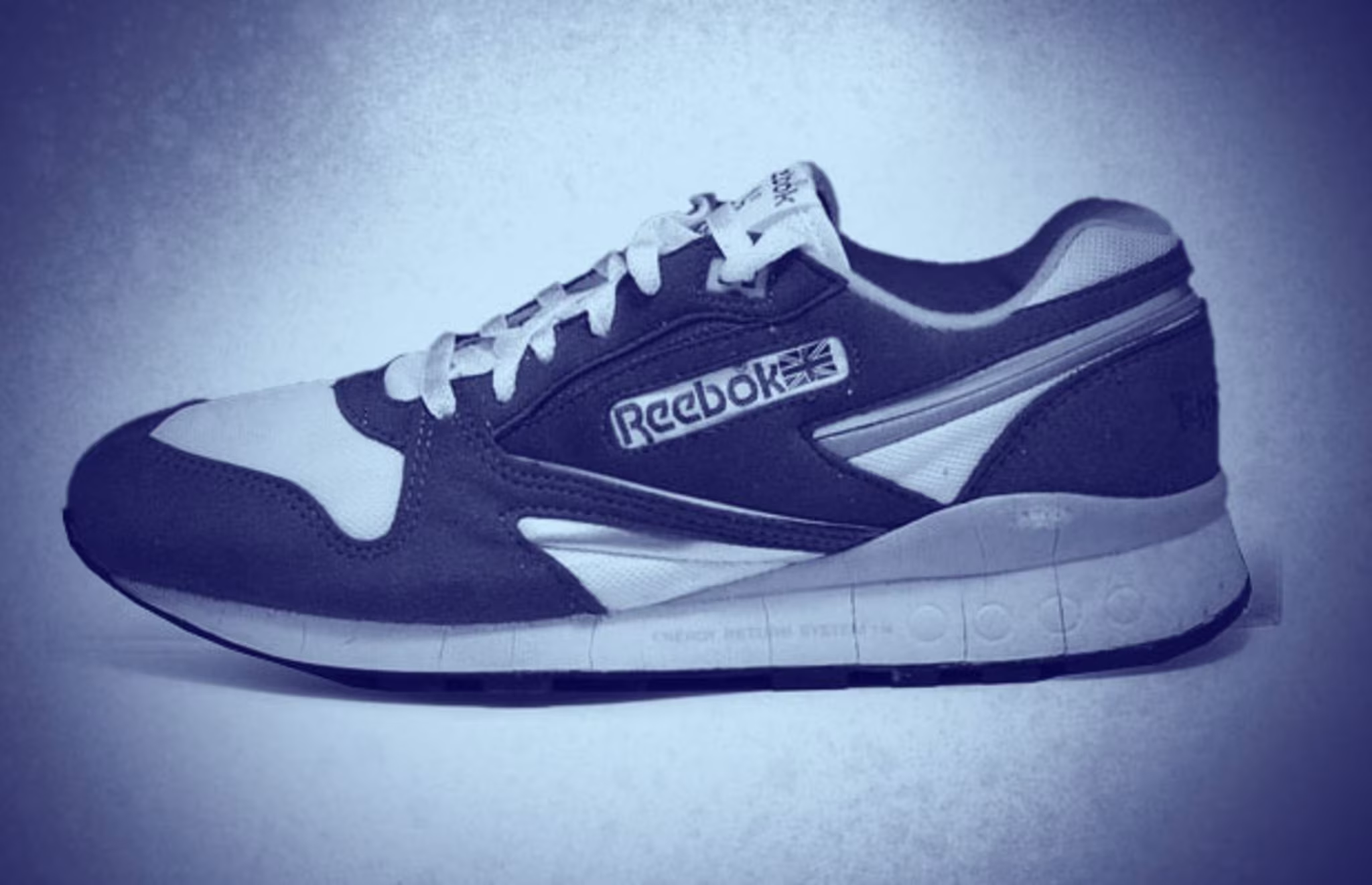
Tubular cushioning in some form has been developed by nearly every manufacturer, from adidas and Nike to K-Swiss. Reebok called theirs the "Energy Return System," or E.R.S., and utilized across virtually every category, starting with the World Trainer running shoe. It didn't have long to shine, as it was quickly eclipsed two years later by a new cushioning technology they dubbed "Hexalite."
Reebok Court Victory Pump
Release Date: 1990
Technology: Reebok Hexalite
Honeycomb cushioning was another case of parallel evolution - hey, the bees thought of it first - but Reebok had the cool name, and the Pump line to debut it in. Michael Chang and Dee Brown were more than happy to demonstrate how well it worked.
Nike Lunaracer
Release Date: 2008
Technology: Flywire, Lunarfoam
The Olympics have traditionally been a great time to introduce new sneaker models and technologies - why not put the best on the best? - and Nike pulled out all the stops for 2008 in Beijing. The flyweight Lunaracer featured Nike's all-new Lunarfoam cushioning, as well as the bridge-inspired Flywire support which provided tremendous weight savings. The Hyperdunk did the same in basketball, but the Lunaracer was by far the purer product.