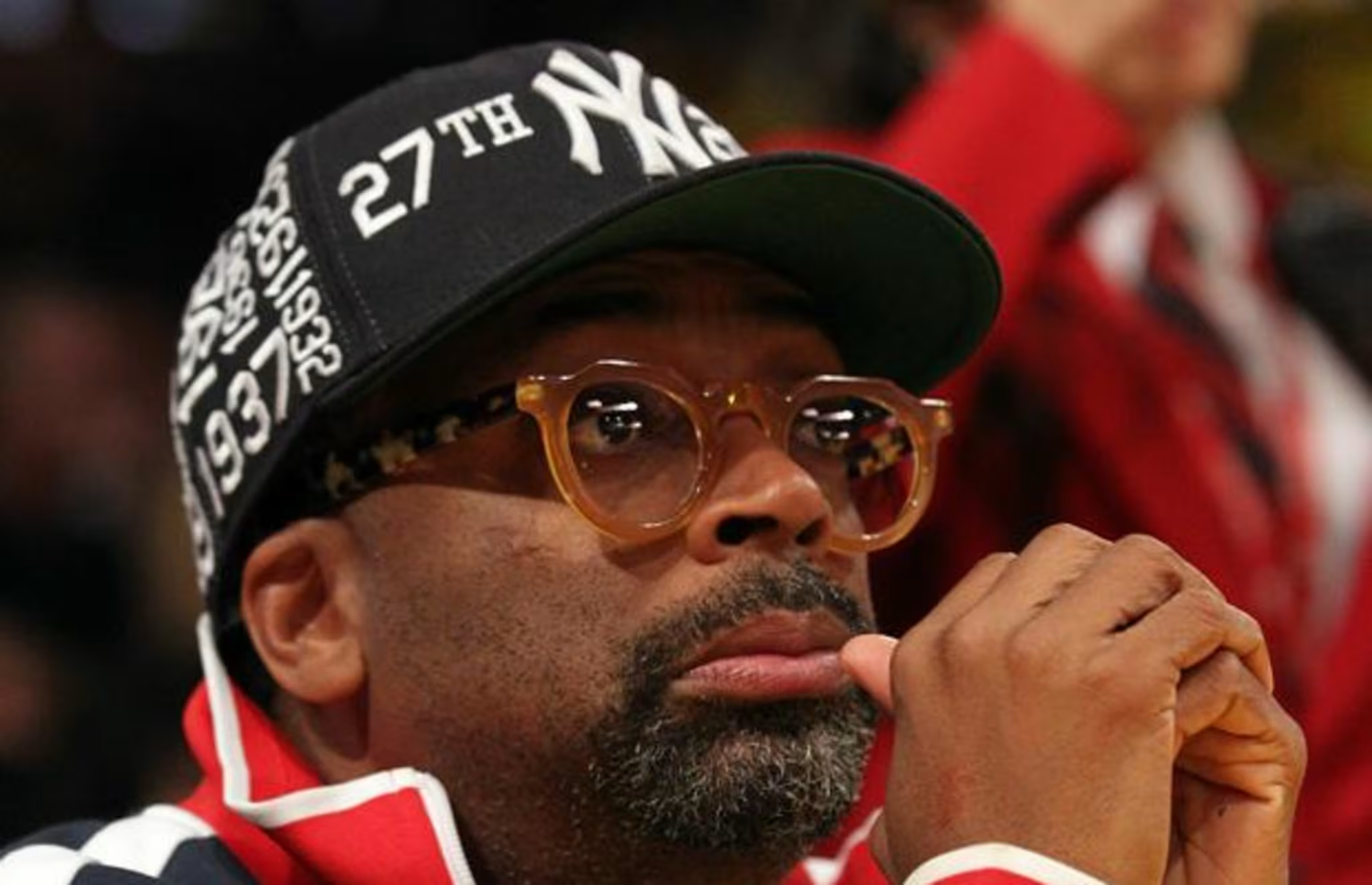
It's no surprise that Spike Lee has little affection for Hollywood, with his past attacks toward the Academy Awards, Quentin Tarantino, and Clint Eastwood. As one of America's most celebrated and controversial filmmakers, the director behind such classics as Do The Right Thing has some new, though still old, bones to pick. Lee spoke to The Hollywood Reporter about how the Academy's awarding process works and the related treatment of actors and actresses.
After reminding us that he hasn't "made a feature film in three years," Lee, who has focused more on documentary work as of late, elaborated on why today's thespians are fucked up. "Can you imagine having a job where someone is [saying], 'No, no, no. Your butt's too big. You're too skinny. Your nose is too big?"
As if that wasn't enough, Tyler Perry's nemesis then quipped, for what seems like the millionth time now, about how Do The Right Thing was snubbed for Best Picture.
"In 1989, Do The Right Thing was not even nominated [for best picture]," said Lee. "What film won best picture in 1989? Driving Miss Motherf---ing Daisy! That's why [Oscars] don't matter, because 20 years later, who's watching Driving Miss Daisy?"
We still can't argue with that. Outside of his angry rants, Lee is keeping busy in other fields; most recently, he attached himself to an in-development HBO series loosely based on Mike Tyson, titled Da Brick.
[Via THR]